





HKUST Develops New Biocompatible Chemical Reaction to Advance Next-Generation Anticancer Prodrugs
Anticancer prodrugs have attracted significant attention from the medical and scientific communities in recent years due to their potential to improve treatment precision while reducing adverse side effects. These drugs are specially engineered to remain inactive until they are activated at specific sites or under particular physiological conditions within the body, at which point they release their therapeutic effect. This targeted approach helps minimize damage to healthy tissues that often occurs when conventional chemotherapy agents attack cancer cells, addressing the longstanding challenge of collateral toxicity in cancer treatment.
However, achieving precise drug activation within the body's highly complex biological environment remains a considerable challenge. Existing chemical strategies and activation technologies continue to face a number of technical limitations and obstacles, highlighting the need for further innovation in this field.
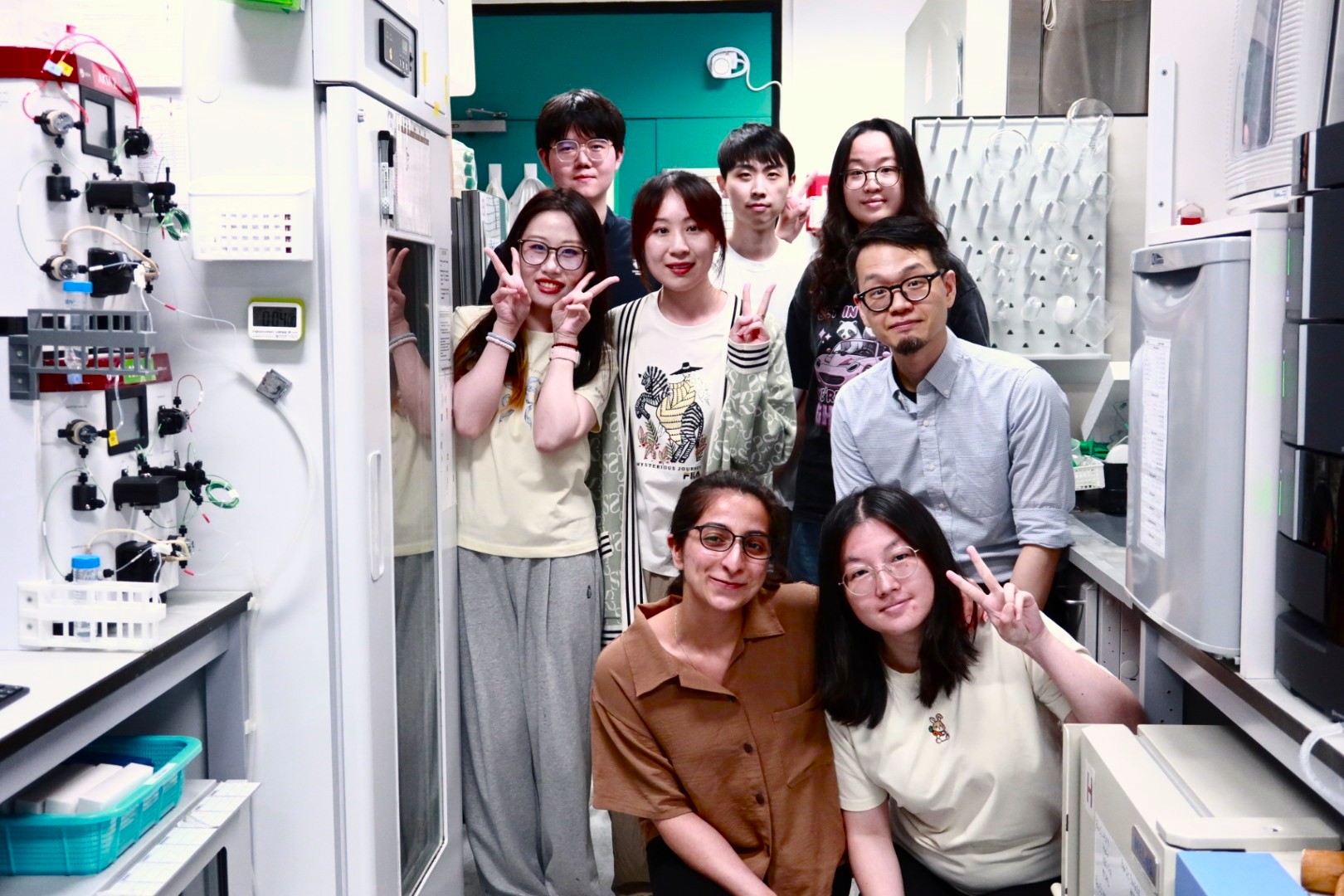
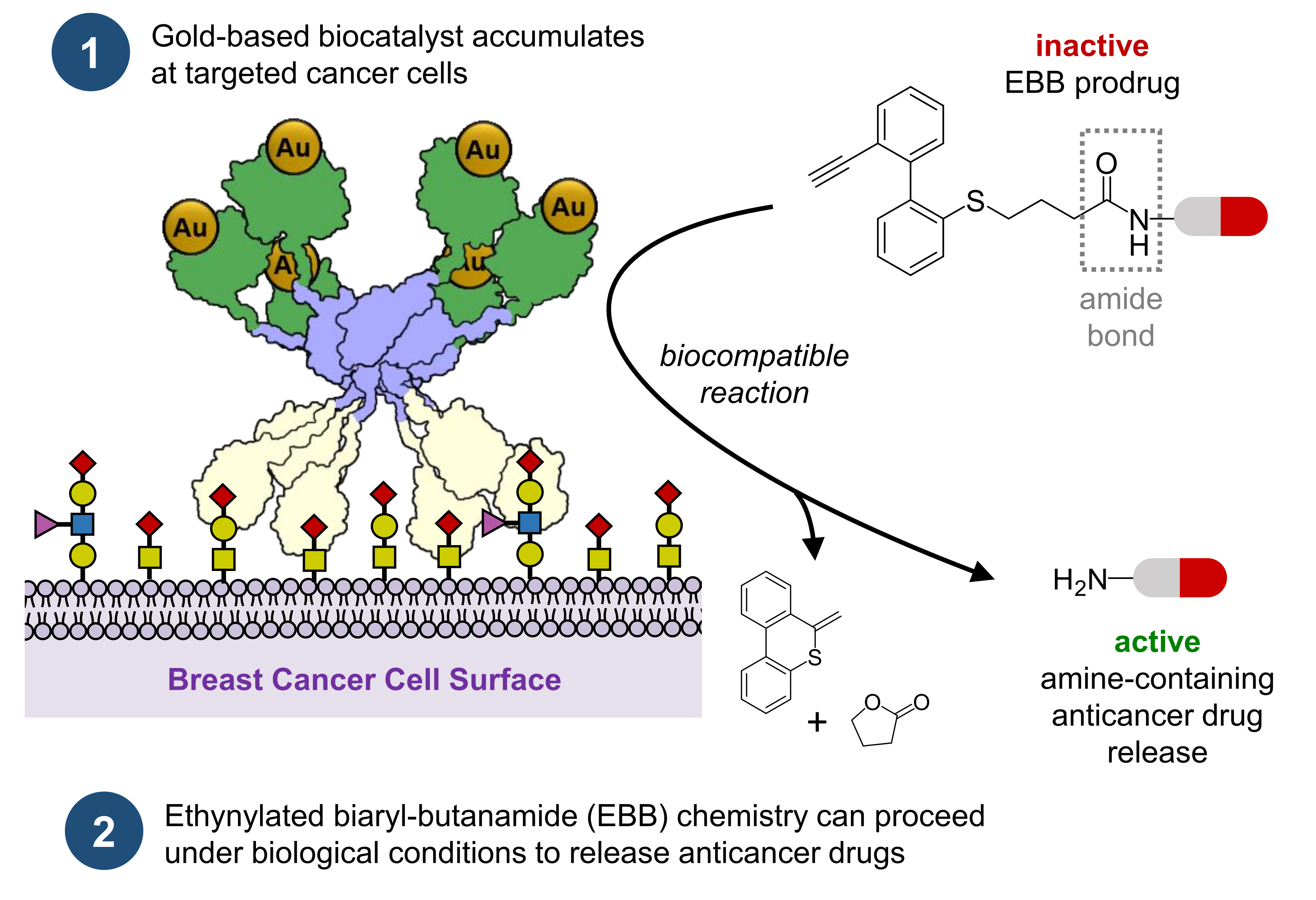
A research team led by Prof. Kenward VONG, Assistant Professor in the Department of Chemistry at the Hong Kong University of Science and Technology (HKUST), has developed a new gold-catalyzed chemical reaction that can operate under biological conditions. The team discovered a unique chemical structure, known as the ethynylated biarylbutanamide (EBB) group, which has broad potential for biological applications, including the development of anticancer prodrugs. The breakthrough also adds a new tool to the rapidly growing field of bioorthogonal chemistry.
Bioorthogonal chemistry enables chemical reactions to occur within living systems without interfering with normal biological processes. While scientists worldwide have developed a vast number of metal-catalyzed reactions, only a limited number can proceed under biological conditions. In recent years, bioorthogonal chemistry has become an important tool driving advances and technological innovation in fields such as chemical biology, biomedical science, and biotechnology. The continual expansion of bioorthogonal reactions is therefore essential to drive ongoing innovation across these fields.
Of particular interest are bioorthogonal reactions that can cleave amide bonds, one of the most prevalent and stable chemical bonds found in nature. Despite their importance, existing bioorthogonal amide bond-cleaving techniques remain constrained by slow reaction rates and limited scope.
To address this challenge, Prof. Vong's team discovered that the EBB group can undergo rapid amide bond cleavage upon exposure to gold catalysts under biologically-relevant conditions. Notably, EBB chemistry was found to proceed much faster than alternative literature reactions. To demonstrate the adaptability of this technology, the team developed an EBB-based anticancer prodrug that could be selectively activated in aggressive breast cancer cells, highlighting a promising strategy for more targeted cancer treatment. The findings of this study were recently published in the Journal of the American Chemical Society titled "Bioorthogonal Gold-Catalyzed Hydrothiolation Leading to Amide Bond Cleavage of Ethynylated Biarylbutanamide Precursors".
Reflecting on the achievement, Prof. Vong said, "Exploring and manipulating biological systems are the key objectives of disciplines like Chemical Biology and Biotechnology. Since researchers have only scratched the surface of what can be done, there are still so many uncharted opportunities left to be discovered. I believe that Chemistry will play a central role in these developments, so we are working hard to not only create more bioorthogonal reactions, but also to adapt them into a diverse range of biological applications."
Sign Up for Our Latest News
Latest News

The Hong Kong University of Science and Technology (HKUST) has achieved notable achievements in the Research Grants Council's (RGC) Senior Research Fellow Scheme (SRFS) and Research Fellow Scheme (RFS) for the 2026/27 exercise, with three distinguished scholars receiving the fellowship awards.
Researchers from The Hong Kong University of Science and Technology (HKUST) have developed a novel chip architecture that enables the miniature acoustic devices inside smartphones to withstand over 12 times higher power loads while maintaining cooler and more stable operation.