


HKUST Hosts Spring Media Reception
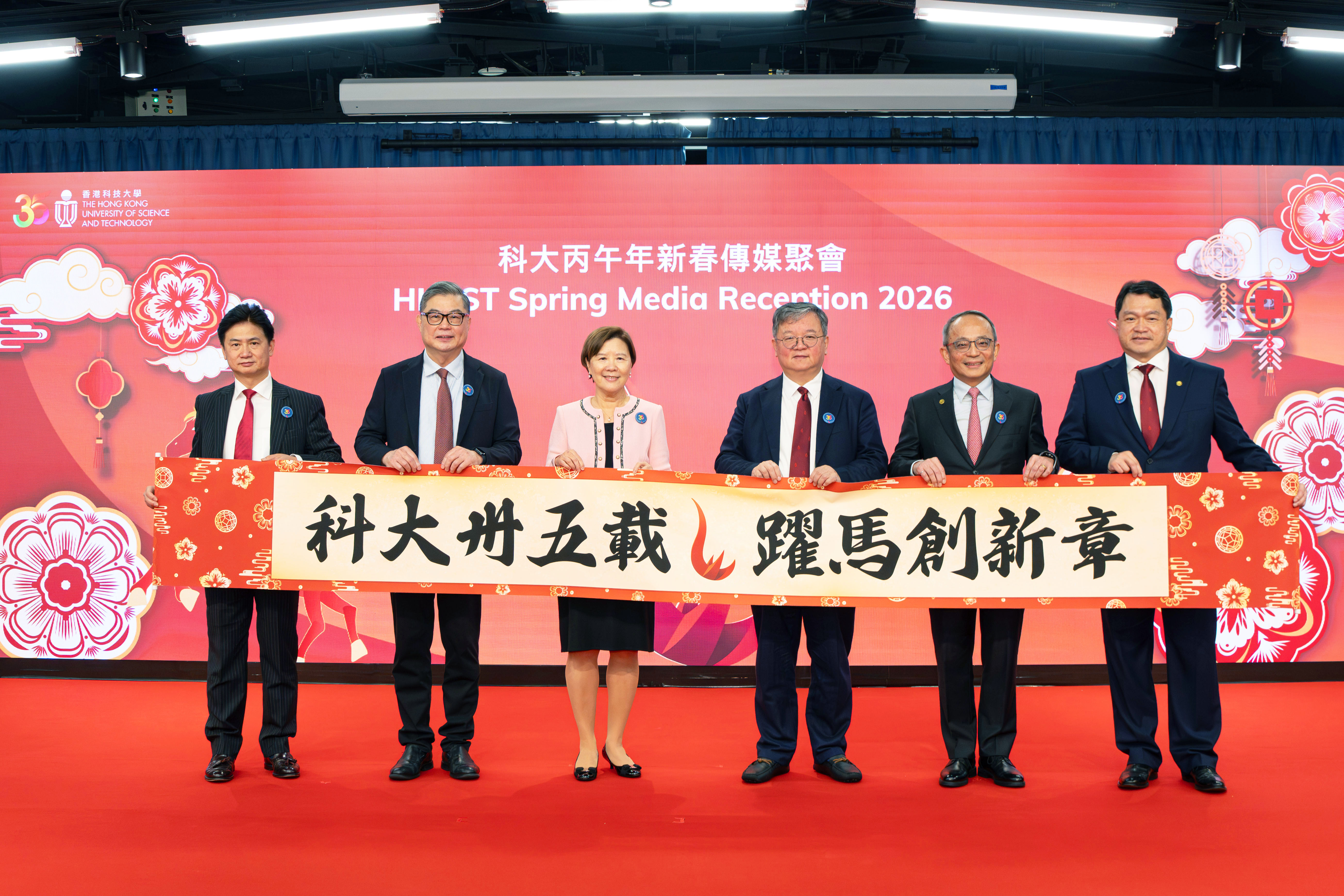
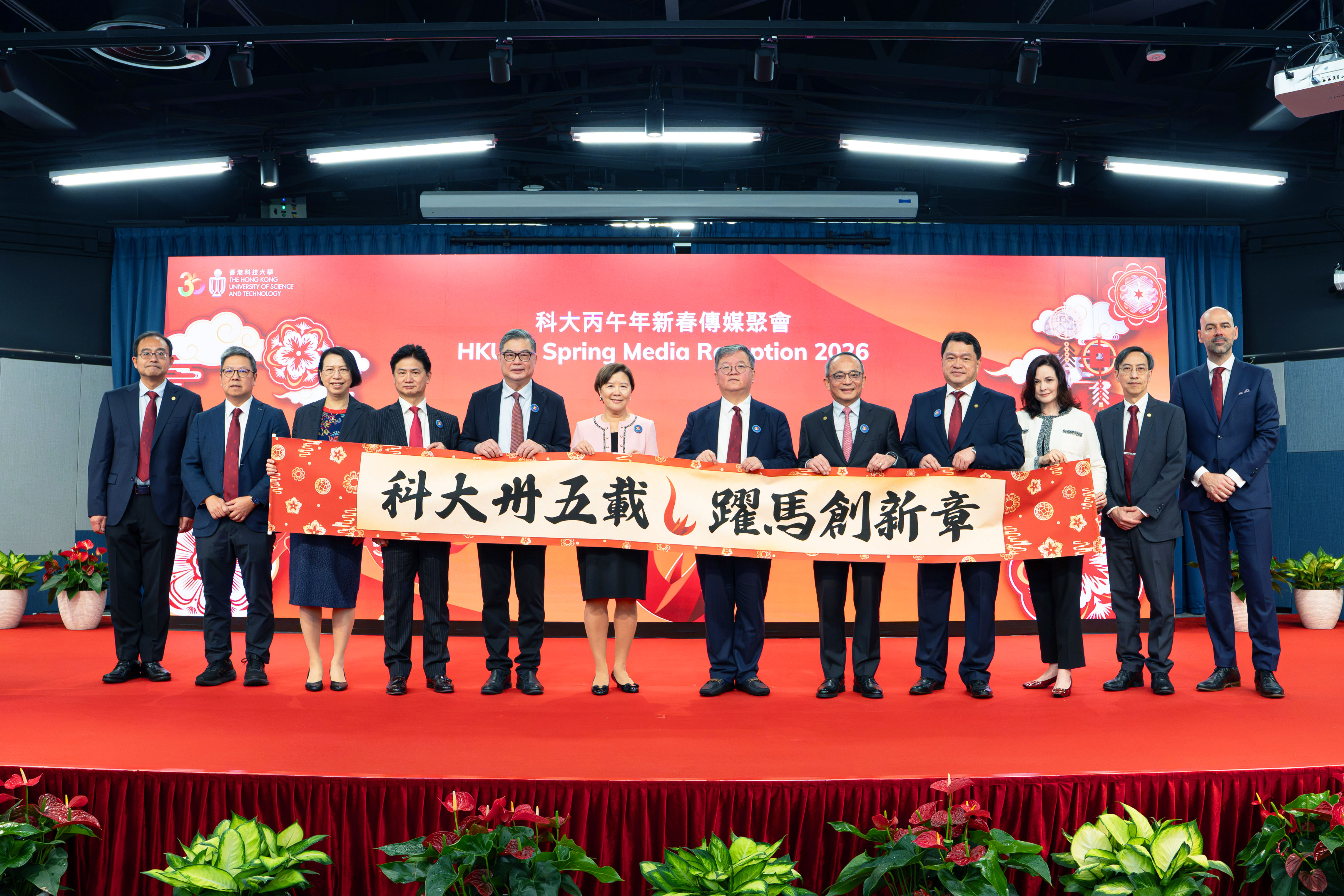
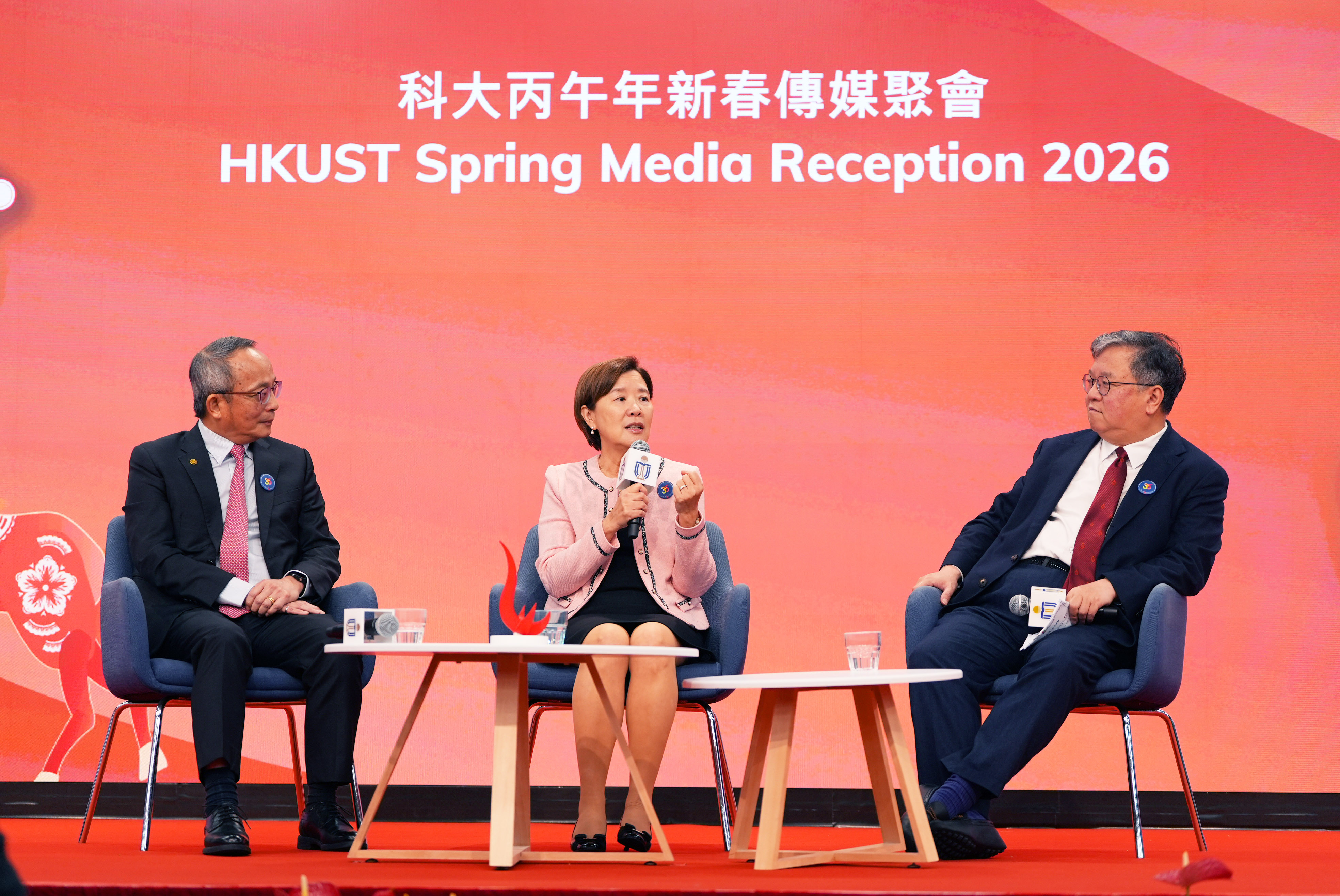
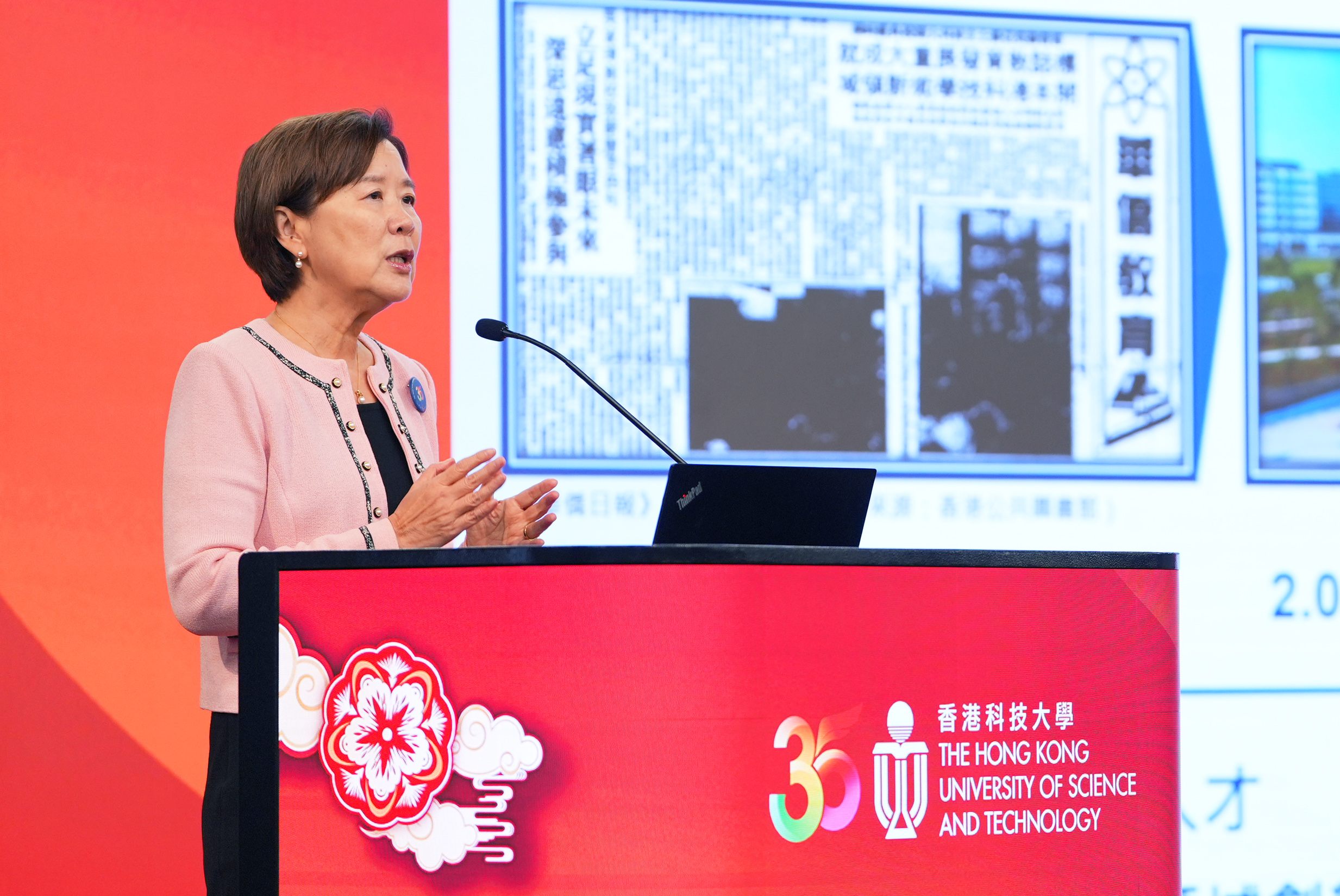
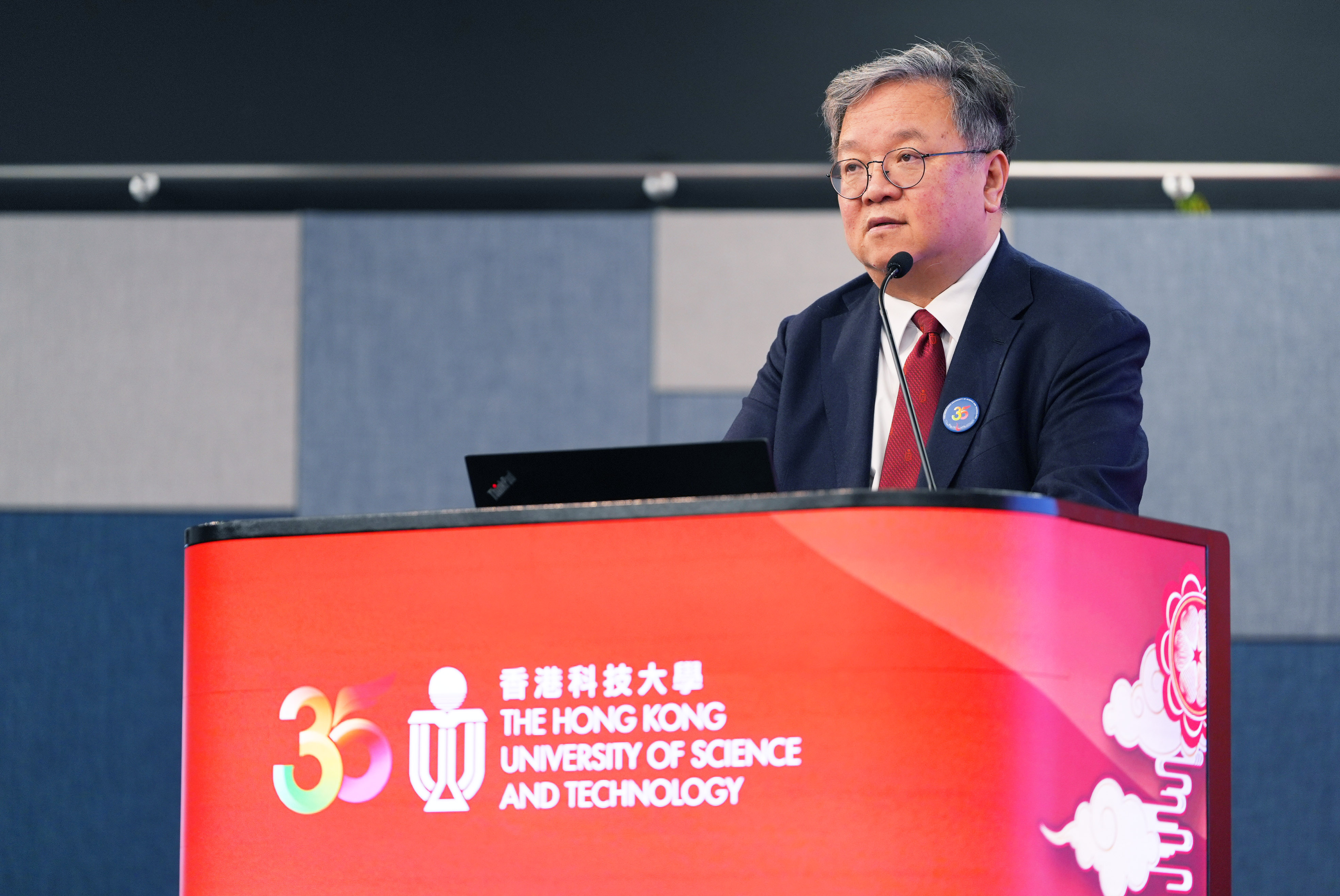
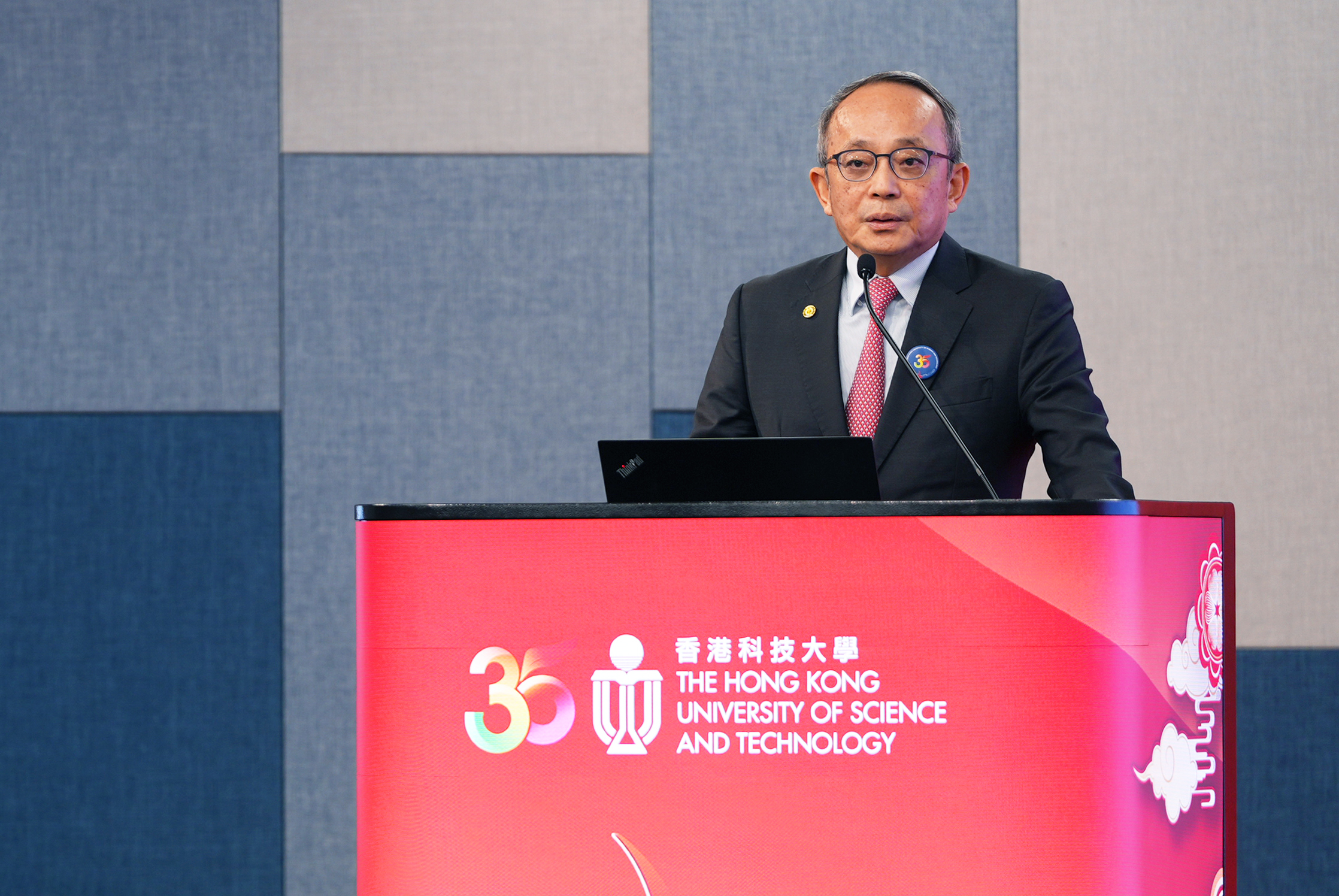
The Hong Kong University of Science and Technology held its annual Spring Media Reception on March 2. Prof. Nancy IP, HKUST President, together with members of the leadership team, including Provost Prof. GUO Yike, Vice-President for Administration and Business Prof. TAM Kar-Yan, Vice-President for Research and Development Prof. Tim CHENG, Vice-President for Institutional Advancement Prof. Charles NG, and Vice-President for Development Ir. John KWONG, Associate Vice-President (Project), Associate Provost (Institutional Data and Research) and Deans of Schools, gathered with media friends to review the University's remarkable achievements over the past year and to share HKUST's key initiatives for the year ahead.
The University leaders held up a banner printed with the couplet: "Galloping into its 35th anniversary, HKUST ushers in a new chapter in the Year of the Horse." The couplet symbolize the University's 35th anniversary and convey the aspiration to forge ahead with full momentum — like a galloping horse — while vigorously advancing the preparation for the new School of Medicine and ushering in a new chapter of development in the Year of the Horse.
President Ip noted, "In Chinese culture, the horse symbolizes forging ahead with determination and striving for continuous self‑improvement — values that resonate with HKUST's can-do spirit. This year marks both the outset of the nation's 15th Five‑Year Plan and the important milestone of HKUST's 35th anniversary. The University will continue to realize the vision set out in its Strategic Plan 2031, strengthening our international competitiveness, attracting and retaining outstanding talent, and driving innovation and knowledge transfer in strategic areas. We will leverage HKUST's unique strengths to contribute to the needs of Hong Kong and the nation, and fully support Hong Kong's development as an international hub for post-secondary education, innovation and technology, as well as health and medical innovation, as well as promoting the "Study in Hong Kong" brand.
In developing Hong Kong into an international hub for innovation and technology, as well as health and medical innovation, HKUST is dedicated to driving innovation and knowledge transfer in strategic areas, and has achieved remarkable results across the following key domains:
Artificial Intelligence (AI): HKUST has long maintained a leading position in AI education and research, with "Data Science and Artificial Intelligence" ranked 17th worldwide and first in Hong Kong in the QS World University Rankings by Subject 2025. To further accelerate AI-powered innovation, the University established Von Neumann Institute last year, focusing on frontier technologies such as embodied intelligence, generative AI and advanced supercomputing, while maintaining close collaboration with the Government and industry partners to nurture top-tier talent.
Medical and Biotechnology: HKUST is vigorously advancing innovative applications in disease treatment, AI‑assisted cancer diagnosis and prognosis, and health monitoring. With the establishment of the HKUST School of Medicine, the University will further strengthen the deep integration of research, clinical practice, and innovative technology, reinforcing Hong Kong's competitive edge in medical innovation.
Low Altitude Economy: HKUST launched the Low Altitude Economy Research Center last year, bringing together expertise in AI, engineering, and business to drive the development of innovation applications and to bolster national and the HKSAR Government's development plans for the Low Altitude Economy. The University is also actively participating in the Government's Low-altitude Economy Regulatory Sandbox X and has already conducted tests on campus—such as drone‑based emergency rescue and noise measurement—to lay the foundation for building a safe and efficient low‑altitude ecosystem. These efforts will help advance applications in urban logistics, emergency and rescue, surveillance, and other application scenarios.
Aerospace Science and Technology and Deep‑Space Exploration: HKUST is leading multiple international research projects, including the "Hong Kong Operation Robot" project for the Cheng'E-8 mission. In parallel, the University also leads the development of the world's first lightweight, high-resolution high-precision carbon dioxide (CO₂) and methane (CH₄) synergistic observatory payload, which is set to make history as it will become Hong Kong's first payload to China's Tiangong Space Station, providing critical data for addressing climate change and supporting the national strategies for achieving Carbon Dioxide Peaking and Carbon Neutrality.
She also updated the media on the latest progress in establishing the HKUST School of Medicine. President Ip noted that preparations are progressing well, and the University plans to sign a Memorandum of Understanding (MoU) with the HKSAR Government in the first quarter of this year. The MoU will cover areas such as curriculum accreditation, teaching hospital resources, recruitment of teaching staff, and funding arrangements. HKUST is actively conducting a global search for the Founding Dean of its medical school. In parallel to the Council Advisory Group, the University has recently established the Steering Committee for the School of Medicine to provide strategic direction for the establishment and development of the new School, ensuring that the preparatory work proceeds in an orderly manner. During the transition period before the Founding Dean takes office, HKUST has set up an Interim Executive Office (IEO) to coordinate the critical activities required for establishing the School of Medicine.
Prof. Guo stated that cultivation and recruitment of innovation and technology talent are vital to HKUST's long-term development. Since 2022, the University has successfully attracted more than 160 scholars from top universities around the world to join HKUST. Last year, we also launched a strategic recruitment initiative focusing on key fields such as brain science and brain-inspired research; gene and biotechnology; clinical medicine and health; AI and robotics; and the exploration of deep space, deep sea, deep earth, and the polar regions. The initiative aims to attract world-class faculty to lead major national research endeavors.
He noted, "HKUST also actively supports the Government's 'Study in Hong Kong' initiative and is committed to fostering a diverse and international campus. As the local university with the highest proportion of international undergraduates among publicly funded institutions, HKUST has a student body representing more than 80 nationalities. The University will further strengthen its overseas recruitment efforts, attracting more students from Europe, the Middle East, ASEAN countries, and other Belt and Road countries and regions."
Prof. Cheng stated that AI is one of HKUST's key research strengths, and the University is committed to leveraging it to accelerate cross‑disciplinary innovation, driving advancements in education, medicine, materials science, art‑technology, climate science, finance, transportation, and more. To ensure that researchers can conduct their work in state-of-the-art facilities, HKUST has completed—and is continuing to develop—several new academic and research buildings, including the Martin Ka Shing Lee Innovation Building, and the Daniel & Mayce Yu Research Building, which is expected to be completed in the second quarter of this year. The former was completed at the end of last year and will serve as a base for establishing industry-collaborative research laboratories, the Institute for Health Innovation, and a pre‑incubation space for deep‑tech start‑ups, fostering sustainable and internationalized growth. The latter, which focuses on life and chemical sciences, is scheduled for completion within this year.
In support of the Government's efforts to align with the national 'AI+' initiative and responding to the substantial computing power needed for AI’s future development, HKUST is also constructing a dedicated building for AI and high‑performance computing facilities. The building is expected to be completed in the fourth quarter of this year, with its first phase scheduled to commence operation in early 2027.It will be equipped with Hong Kong's largest H800 supercomputing module and applying the Liquid Immersion Cooling system, which will cut electricity consumption by 45 percent.
For media enquiries, please contact:
PR and Media Team, Global Engagement and Communications Office
Email: media@ust.hk
Sign Up for Our Latest News
Latest News
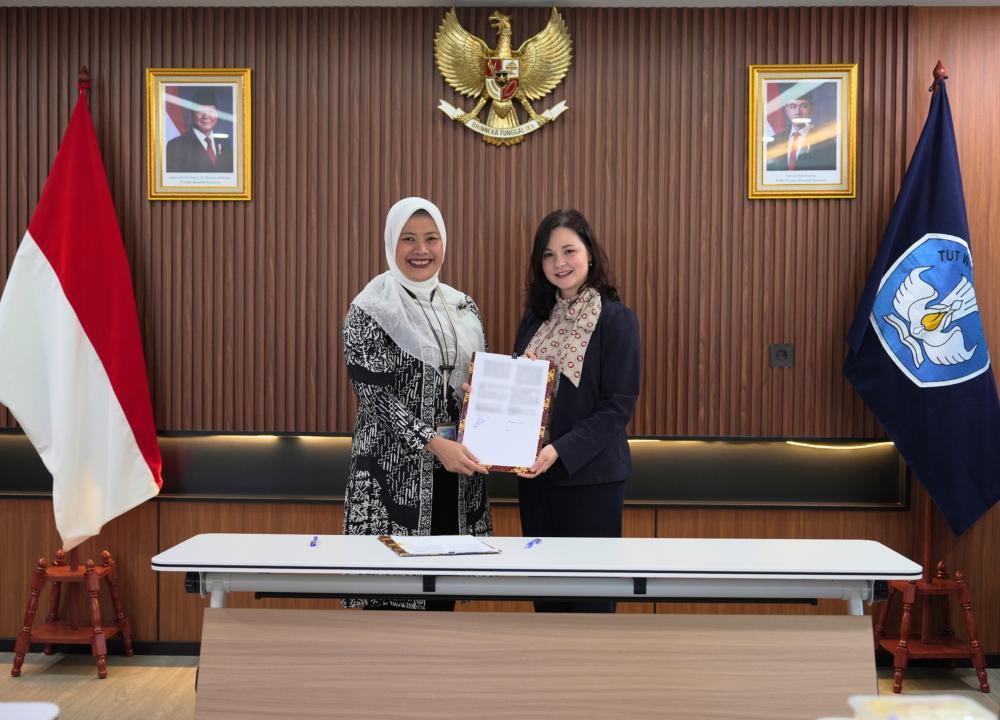
The Hong Kong University of Science and Technology (HKUST) and the Ministry of Higher Education, Science, and Technology of the Republic of Indonesia have signed a new Memorandum of Understanding (MoU) to reinforce the implementation of an Indonesian government-funded scholarship framework aimed at cultivating top-tier future talent.
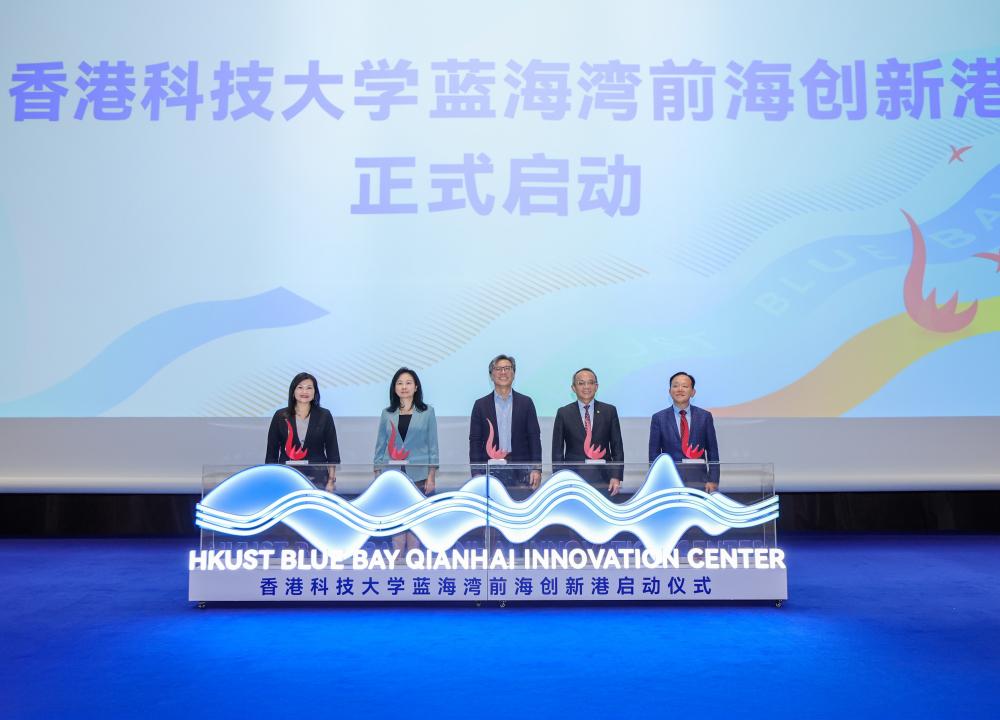
The Hong Kong University of Science and Technology (HKUST) recently inaugurated its Blue Bay Qianhai Innovation Center (the Center), marking a significant strategic step in strengthening the University’s presence in Qianhai, deepening Shenzhen-Hong Kong collaboration, and expanding its global innovation footprint.
The Hong Kong University of Science and Technology (HKUST) has launched the new WavyOcean Digital Twin Earth System Version 3.0, making its online platform available to the public for the first time. Built around the concept of "Taohai" – a Chinese term meaning "searching or discovering from the sea", the platform transforms ocean data from research-focused resources into shared knowledge accessible to all.