




News & Stories
2026
News
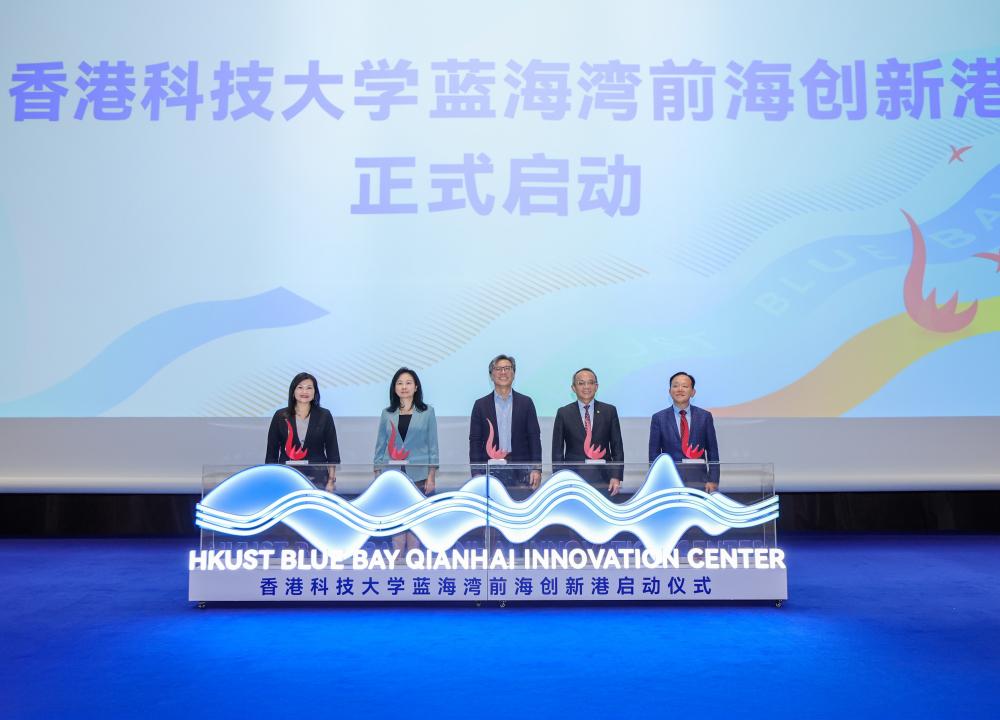
HKUST's Blue Bay Qianhai Innovation Center Officially Inaugurated Advancing the University's Strategic Innovation and Technology Development in the GBA
The Hong Kong University of Science and Technology (HKUST) recently inaugurated its Blue Bay Qianhai Innovation Center (the Center), marking a significant strategic step in strengthening the University’s presence in Qianhai, deepening Shenzhen-Hong Kong collaboration, and expanding its global innovation footprint.The launch of the Center represents the latest milestone in the development of HKUST’s Blue Bay innovation and entrepreneurship ecosystem in Shenzhen. Since establishing the HKUST Blue Bay Incubator and its first base in Nanshan in 2016, HKUST has steadily expanded its innovation footprint in the city, adding a second base in the Hetao Shenzhen-Hong Kong Science and Technology Innovation Cooperation Zone in 2020 and now a third strategic base in Qianhai. Together, the three bases form an integrated platform that supports technology transfer, startup incubation, entrepreneurship, and cross-border innovation collaboration between Hong Kong and Shenzhen.

News
HKUST Secures Largest Share of RGC Strategic Topics Grant to Drive Innovation in Elderly Healthcare
The Hong Kong University of Science and Technology (HKUST) has distinguished itself in the 2026/2027 Strategic Topics Grant (STG) of the Research Grants Council (RGC) under the University Grants Committee. Of the six approved projects, two are led by HKUST scholars, collectively receiving more than HKD 54.41 million in funding (including matching fund from the University). This represents the highest total funding amount among local universities. The projects leverage artificial intelligence (AI) in healthcare to enhance the management of bacterial infections in older adults and provide integrated management for Parkinson's disease, underscoring HKUST's leadership in cutting-edge research and its commitment to developing innovative solutions to the healthcare challenges posed by the aging global population.
News
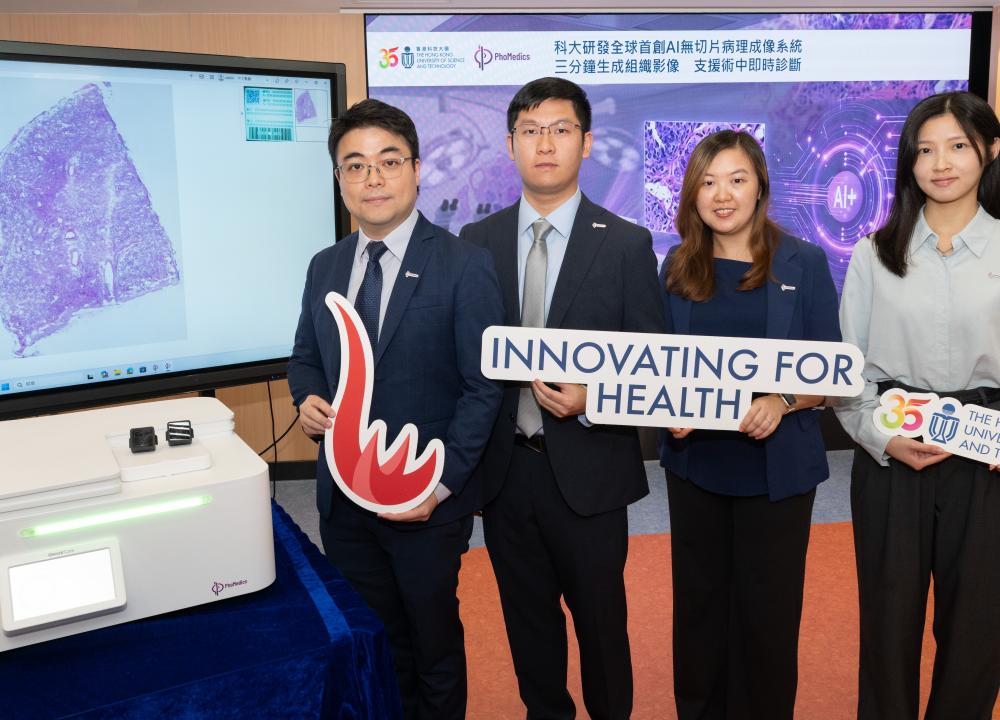
HKUST Develops World's First AI Slide-Free Pathology Imaging System
A research team from The Hong Kong University of Science and Technology (HKUST), together with an HKUST-incubated medtech startup, PhoMedics Limited, has developed Glanzir®, the world's first artificial intelligence (AI)-enabled, slide-free pathology imaging system. The system enables direct imaging of fresh tissue without the need for conventional procedures such as freezing, sectioning, and staining, producing histological images in approximately three minutes in an operating room setting for intraoperative assessment.
News
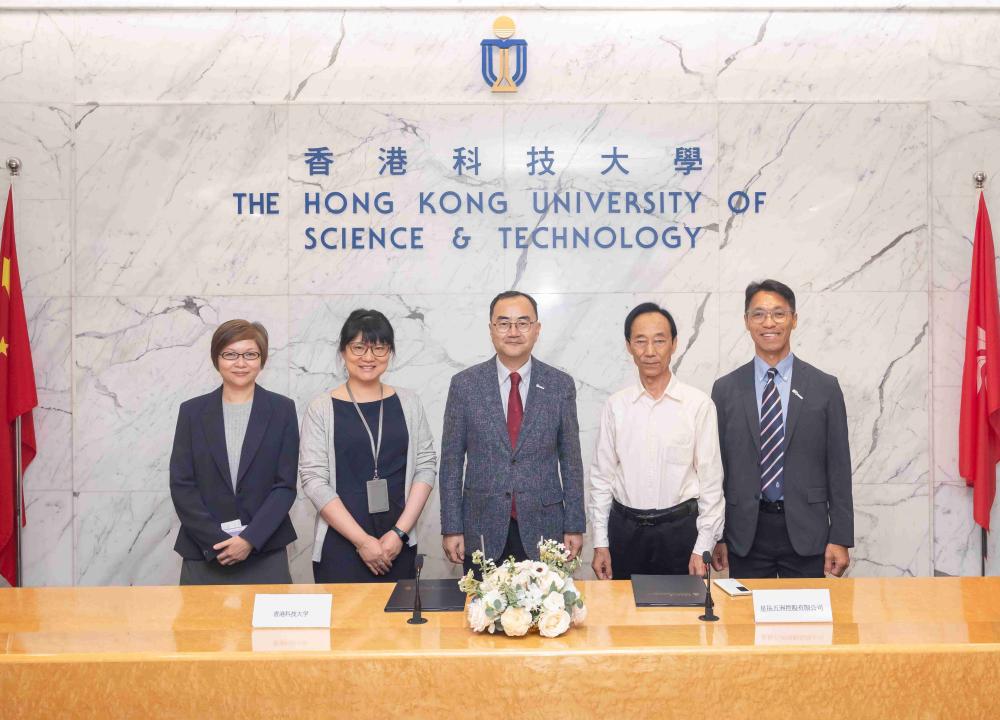
HKUST Secures Support from Stellar Rise for In-Orbit Bio-Inspired Robotic Project
The Centre for AI Robotics in Space Sustainability (CAIRSS) at The Hong Kong University of Science and Technology (HKUST) has secured HKD 46 million in funding from Stellar Rise Global Holdings Limited (Stellar Rise) to develop advanced bio-inspired robotic manipulation technologies for in-orbit operations. The project aims to support space debris removal and enable next-generation in-orbit manufacturing. With strong backing from the Chinese Academy of Sciences (CAS)’ institutions, the project targets an in-orbit demonstration by 2029, contributing to the sustainable development of space technology and the space economy, while supporting the nation's goal of advancing its position as an aerospace powerhouse.
News
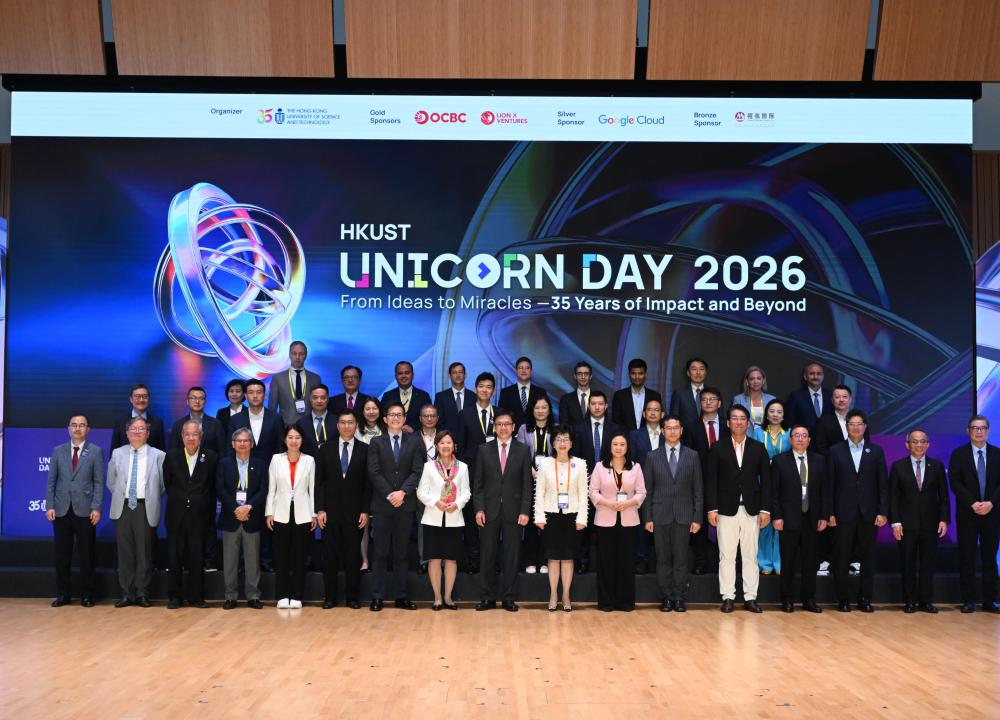
HKUST Unicorn Day Brings Together Global Innovation and Entrepreneurship Leaders
The Hong Kong University of Science and Technology (HKUST) today successfully hosted its annual "Unicorn Day," one of Hong Kong's flagship innovation and entrepreneurship events. The event brought together over 1,800 participants, including students, faculty, and alumni, as well as international and local government representatives, industry partners, investors, innovation and technology entrepreneurs, and researchers. Participants exchanged insights on strategies to strengthen collaboration across the innovation ecosystem, foster cross-disciplinary partnerships, and accelerate the translation of research outcomes into real-world impact.
News
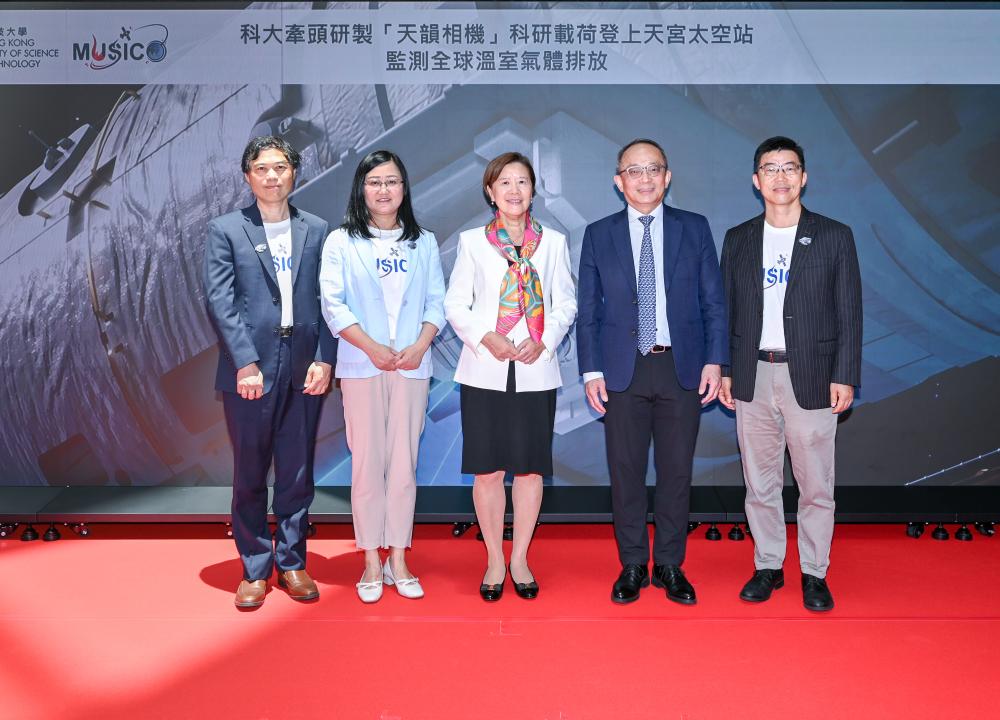
World’s First Lightweight High Resolution High Precision CO₂ and CH₄ Point Source Detector “MUSICO” Arrives at Tiangong Space Station via Tianzhou-10
The world’s first lightweight, high‑resolution, high‑precision synergistic observatory for carbon dioxide (CO₂) and methane (CH₄) emission point sources – named “MUSICO”, Multi‑Spectral Imaging Carbon Observatory, led by The Hong Kong University of Science and Technology (HKUST) – was successfully launched aboard the Tianzhou‑10 cargo spacecraft on May 11 and has arrived at China’s Tiangong Space Station. This is not only Hong Kong’s first scientific payload deployed on the national space station, but also a historic breakthrough for the city in the development of high‑end aerospace instruments. The project fully demonstrates Hong Kong’s strong capability to build national‑level cutting-edge scientific payloads, to participate in long‑term space station missions, and to play a key role in addressing global climate change while serving the nation’s strategic “carbon peak and carbon neutrality” goals.
News
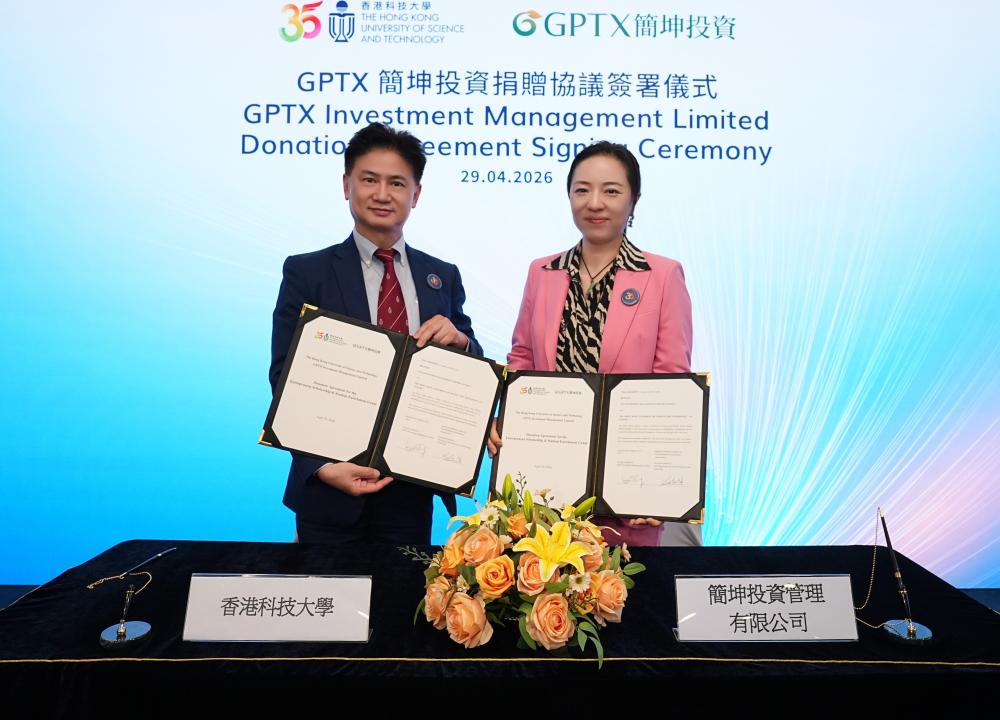
HKUST Receives Donation from GPTX to Propel Student Entrepreneurship and Innovation
The Division of Integrative Systems and Design (ISD) of The Hong Kong University of Science and Technology (HKUST) has received a donation from GPTX Investment Management Limited (GPTX簡坤投資), a leading Hong Kong-based digital investment firm, in support of student entrepreneurship and innovation. This donation underscores a shared commitment to fostering academic excellence and cultivating the next generation of innovators.
News
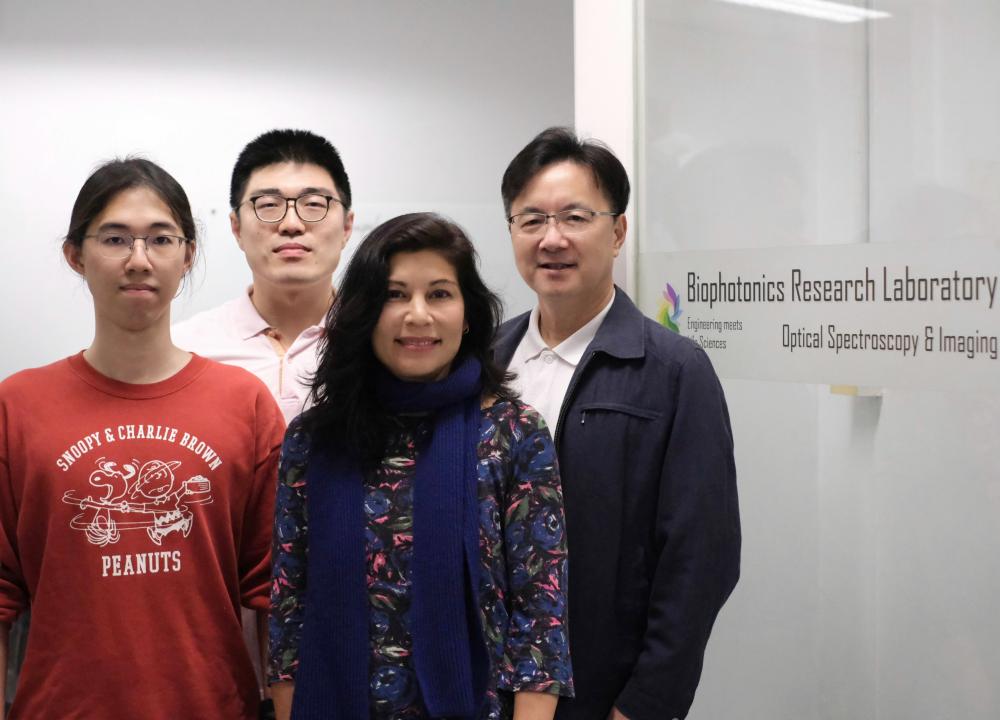
HKUST Team Unveils Innovative Technology for Precise Reading and Control of Brain Circuits to Advance Brain Disease Research
A cross-disciplinary team led by Prof. QU Jianan, Professor from the Department of Electronic and Computer Engineering and Prof. Julie L. SEMMELHACK, Visiting Assistant Professor from the Division of Life Science at The Hong Kong University of Science and Technology (HKUST) has developed a powerful laser control technique. Functioning as a “smart dimmer”, it can selectively adjust the brightness of every pixel during laser scanning, and prevent unintended neural activation, thereby significantly enhancing the precision of all-optical brain manipulation and imaging. This innovation will drive research into brain disease mechanisms and facilitate small animal disease models for new drug development.