




News & Stories
2026
News
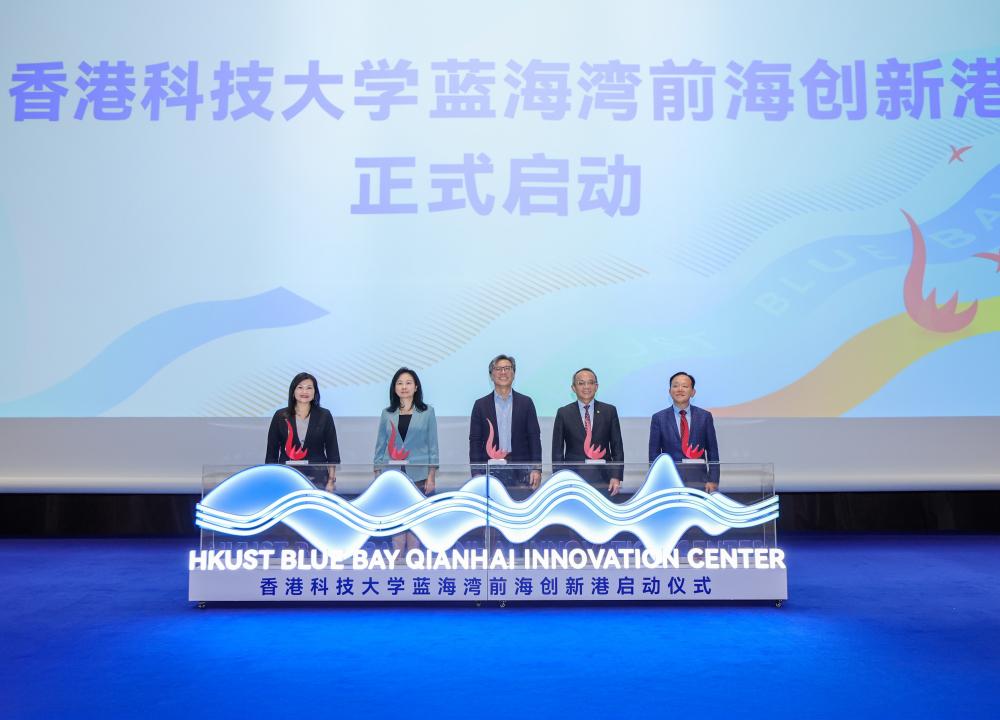
HKUST's Blue Bay Qianhai Innovation Center Officially Inaugurated Advancing the University's Strategic Innovation and Technology Development in the GBA
The Hong Kong University of Science and Technology (HKUST) recently inaugurated its Blue Bay Qianhai Innovation Center (the Center), marking a significant strategic step in strengthening the University’s presence in Qianhai, deepening Shenzhen-Hong Kong collaboration, and expanding its global innovation footprint.The launch of the Center represents the latest milestone in the development of HKUST’s Blue Bay innovation and entrepreneurship ecosystem in Shenzhen. Since establishing the HKUST Blue Bay Incubator and its first base in Nanshan in 2016, HKUST has steadily expanded its innovation footprint in the city, adding a second base in the Hetao Shenzhen-Hong Kong Science and Technology Innovation Cooperation Zone in 2020 and now a third strategic base in Qianhai. Together, the three bases form an integrated platform that supports technology transfer, startup incubation, entrepreneurship, and cross-border innovation collaboration between Hong Kong and Shenzhen.
News
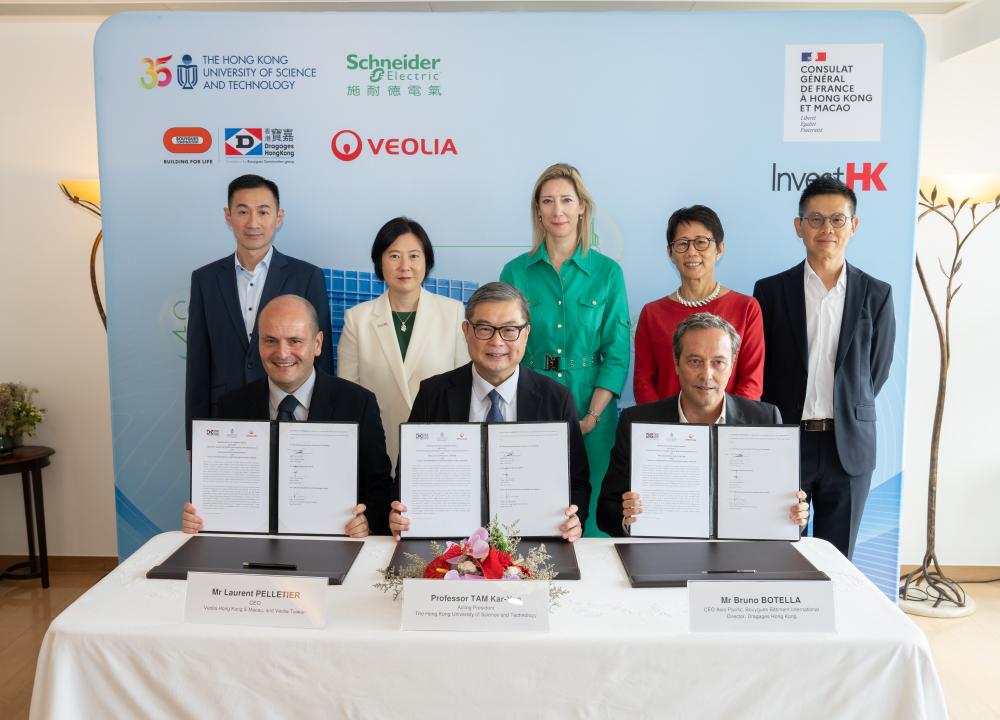
HKUST and Team France Ink Pact to Advance Low-carbon Retrofit via Groundbreaking Green Investment Model
The Hong Kong University of Science and Technology (HKUST) and a consortium of leading French corporations today signed a works contract and a second-phase Memorandum of Understanding (MoU). Welcomed by Invest Hong Kong (InvestHK), the two agreements mark a significant step forward and turn the low-carbon retrofit partnership established in September 2025 into concrete action.

News
HKUST Secures Largest Share of RGC Strategic Topics Grant to Drive Innovation in Elderly Healthcare
The Hong Kong University of Science and Technology (HKUST) has distinguished itself in the 2026/2027 Strategic Topics Grant (STG) of the Research Grants Council (RGC) under the University Grants Committee. Of the six approved projects, two are led by HKUST scholars, collectively receiving more than HKD 54.41 million in funding (including matching fund from the University). This represents the highest total funding amount among local universities. The projects leverage artificial intelligence (AI) in healthcare to enhance the management of bacterial infections in older adults and provide integrated management for Parkinson's disease, underscoring HKUST's leadership in cutting-edge research and its commitment to developing innovative solutions to the healthcare challenges posed by the aging global population.
News
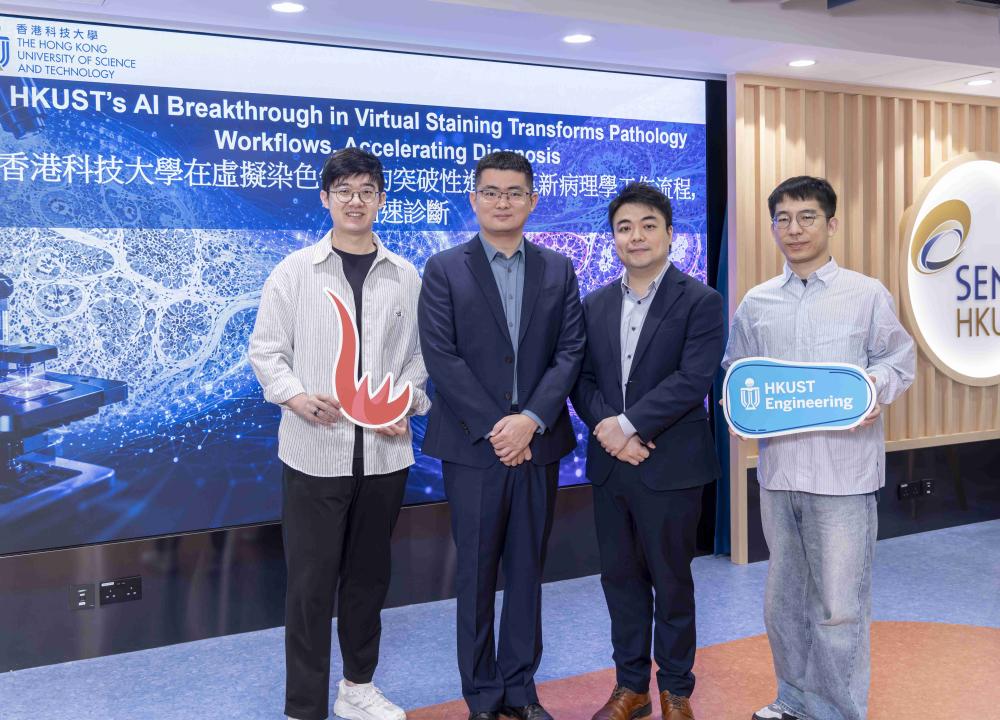
HKUST Researchers Develop GenAI Framework for Misalignment-Resistant Virtual Staining to Accelerate Histopathology Workflows
Histopathology is a cornerstone of clinical diagnosis, especially in cancer care. However, conventional chemical staining is often time-consuming and labor-intensive and may consume precious tissue samples. A research team from the School of Engineering at The Hong Kong University of Science and Technology (HKUST) has developed a novel generative AI (GenAI) framework that can produce high-fidelity virtually stained images even when training image pairs are imperfectly aligned, paving the way for faster and more tissue-saving histopathology workflows. The study titled “Generative AI for misalignment-resistant virtual staining to accelerate histopathology workflows” was recently published in the international journal Nature Communications.
News
HKUST researchers reveal the pathogenesis of a rare respiratory disease through super-resolution microscopy
Researchers at The Hong Kong University of Science and Technology (HKUST) have uncovered how mutations in a specific gene can trigger a rare respiratory disease, shedding light on the critical role played by cellular structures known as cilia. Cilia are tiny and hair-like organelles extruding from the surface of most cell types, serving either sensory or motile functions. In the eyes, photoreceptor cells possess sensory cilia that are important for vision. Meanwhile, motile cilia align along the surface of the respiratory tract and function in airway clearance of mucus and inhaled pathogens.
News
HKUST Establishes Robotics Industrial Alliance to Advance Industry-Academia-Research
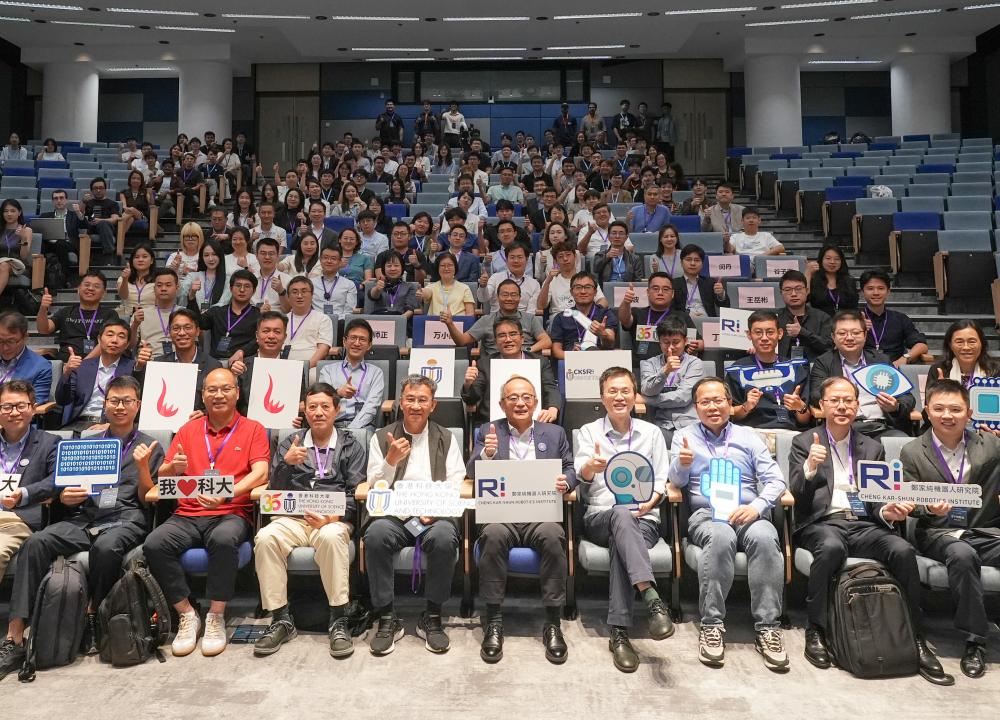
The Hong Kong University of Science and Technology (HKUST)'s Cheng Kar-Shun Robotics Institute (CKSRI) today announced the establishment of its Industrial Alliance, alongside the inaugural CKSRI Industrial Summit. The initiative brings together leaders from academia and industry to strengthen connections between HKUST research teams and a broad network of industry partners, fostering collaboration in research development, technology translation, and talent development. Through the Alliance, CKSRI aims to establish a practical, sustainable collaboration platform that supports the deployment of robotics and artificial intelligence (AI) technologies across diverse application scenarios.
News
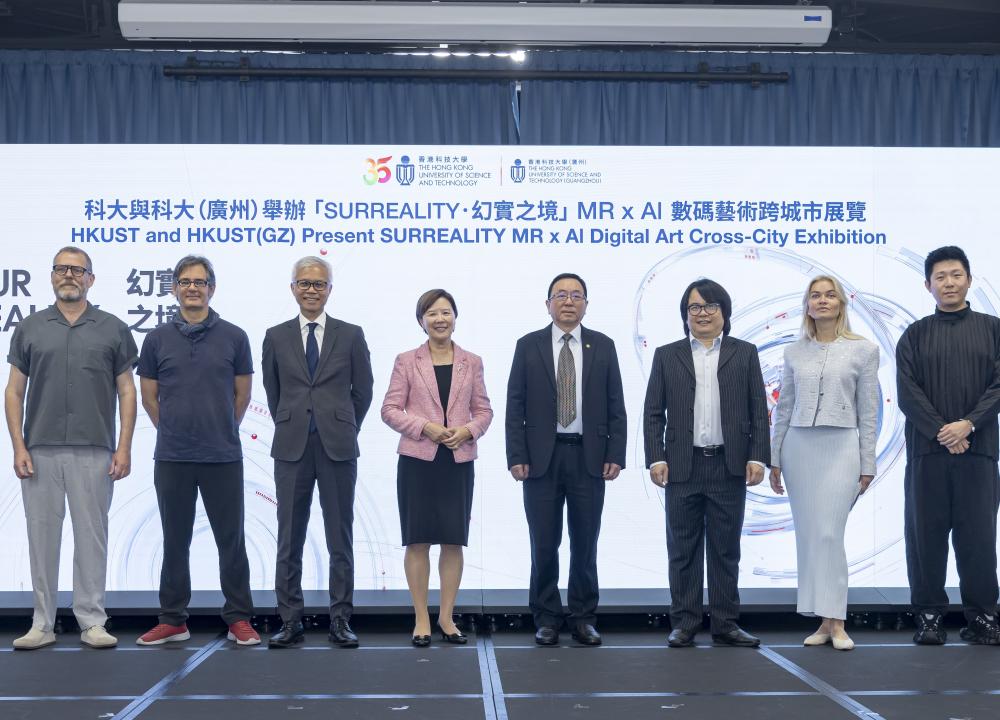
HKUST and HKUST(GZ) Present SURREALITY MR × AI Digital Art Cross-City Exhibition
The Hong Kong University of Science and Technology (HKUST), in collaboration with the Center for Metaverse and Computational Creativity at HKUST(Guangzhou), presents the SURREALITY Mixed Reality (MR) × Artificial Intelligence (AI) Digital Art Cross-City Exhibition. As part of HKUST's 35th-anniversary celebrations, an exclusive media preview of the world's first large-scale, cross-regional MR × AI digital art exhibition was held at the University's Clear Water Bay campus.Showcasing selected works by renowned international and Chinese Mainland digital artists, as well as faculty and students from both campuses, the exhibition integrates creativity with Virtual Reality (VR), MR, and AI technologies. It transforms the campus into a global hub for arts innovation and technological excellence.
News
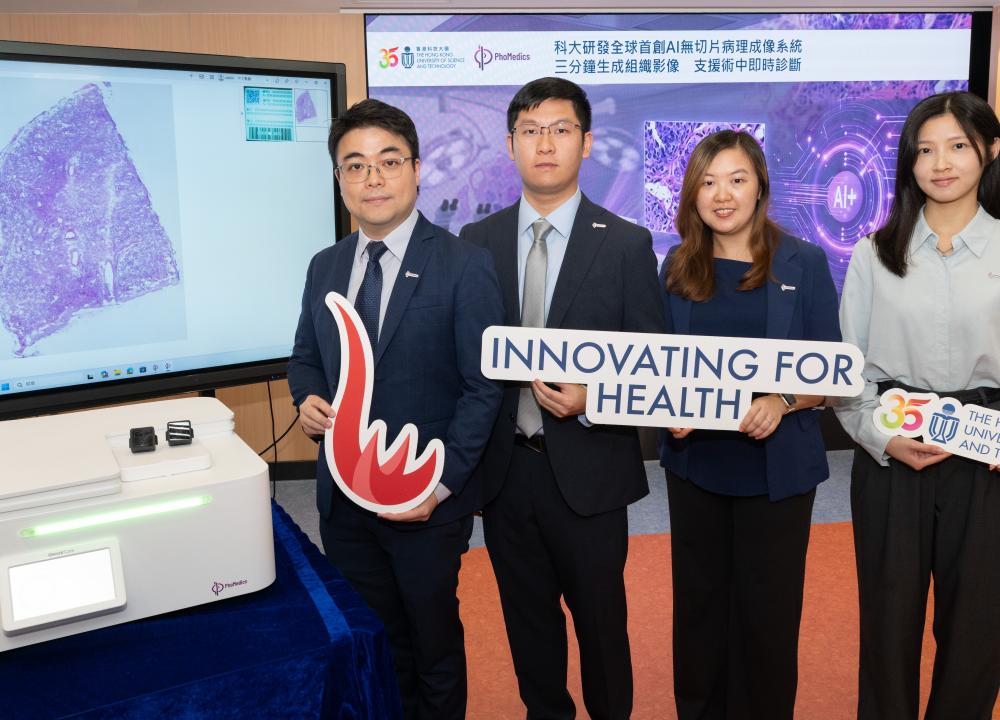
HKUST Develops World's First AI Slide-Free Pathology Imaging System
A research team from The Hong Kong University of Science and Technology (HKUST), together with an HKUST-incubated medtech startup, PhoMedics Limited, has developed Glanzir®, the world's first artificial intelligence (AI)-enabled, slide-free pathology imaging system. The system enables direct imaging of fresh tissue without the need for conventional procedures such as freezing, sectioning, and staining, producing histological images in approximately three minutes in an operating room setting for intraoperative assessment.