


HKUST Researchers Reveal How Tropical Pacific Climate Shifts Amplify Arctic Sea‑Ice Melt
Climate Chain Reactions Intensified After 2000

Led by scholars from The Hong Kong University of Science and Technology (HKUST), a research team has discovered that, since the early 2000s, both sea surface temperature changes near the equator and the associated atmospheric adjustments over the Pacific have accelerated markedly—becoming a key driver of the increasingly rapid loss of Arctic sea ice during autumn. The findings highlight that, under ongoing global warming, climate linkages between distant regions are far more dynamic and complex than previously understood.
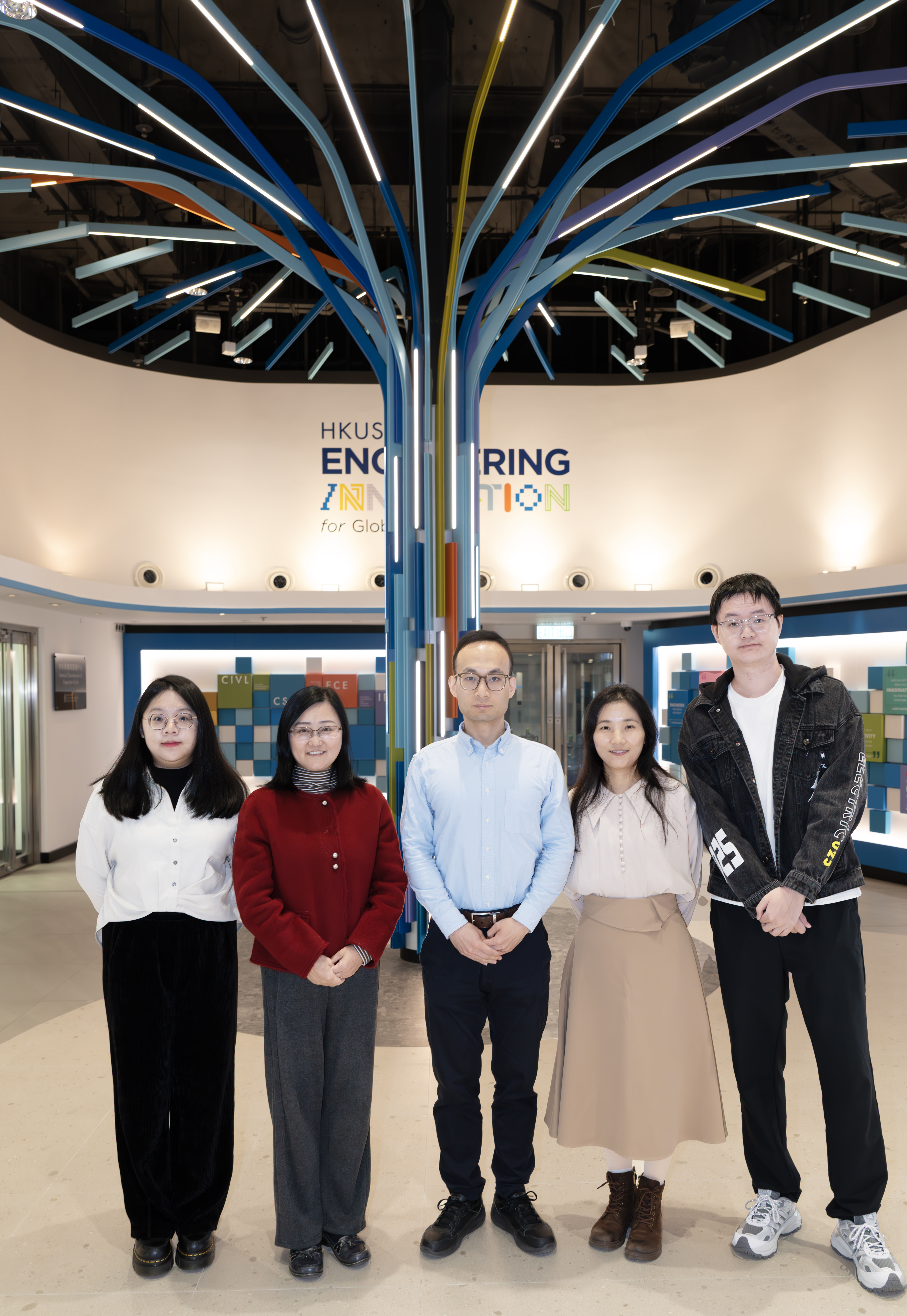
The study was led by Prof. SU Hui, Chair Professor in the Department of Civil and Environmental Engineering and Global STEM Professor at HKUST. The research team comprised Research Assistant Professor Prof. WANG Cen and Prof. LI Yana, along with PhD students WANG Yanjia and ZHU Kuilin, all from the Department of Civil and Environmental Engineering at HKUST, and was supported by collaborators from the University of Science and Technology of China and Shaanxi University of Technology. Drawing on 45 years of climate data from 1979 to 2023, the team published their findings in Science Advances under the title “Post‑2000 faster ENSO phase transitions amplify autumn sea ice loss in the Laptev–East Siberian Sea.”
The research focuses on the El Niño–Southern Oscillation (ENSO), a climate phenomenon driven by coupled ocean–atmosphere interactions in the equatorial Pacific. El Niño is characterized by abnormal warming in the central–eastern equatorial Pacific, whereas La Niña features anomalous cooling in the same region. The “Southern Oscillation” refers to changes in atmospheric pressure between the Pacific and the Indonesia–Australia region, forming the atmospheric counterpart of ENSO. Together, these coupled variations shape one of the most influential modes of global climate variability.
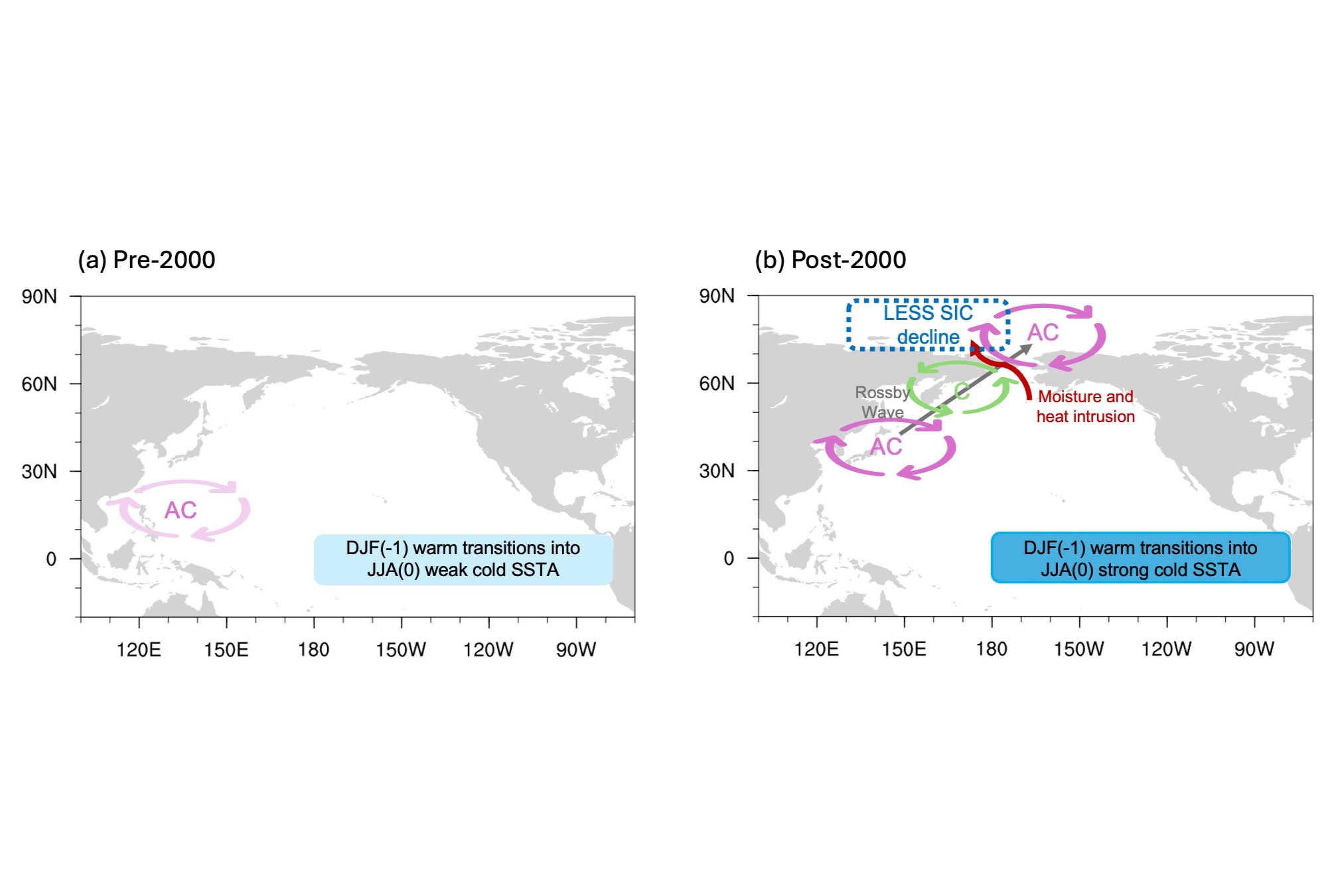
The team found that when El Niño intensity in the preceding winter undergoes more rapid transitions, the following year's autumn sea ice melt in the Arctic accelerates correspondingly, with the most pronounced impacts occurring in the Laptev and East Siberian Seas (LESS), key sections of the Northern Sea Route. Prof. Wang Cen, first author of the study explained “Since the 2000s, the warm sea surface anomalies associated with El Niño no longer fade gradually but instead shift rapidly to cold anomalies. It is like switching a pot of hot water with cold water in an instant. This abrupt change exerts a stronger shock on the atmosphere, significantly strengthening the Western North Pacific anticyclone (WNPAC). The enhanced WNPAC then channels heat and moisture from the tropics toward the Arctic along a northeastward‑propagating Rossby wave train, leading to warmer and more humid autumn conditions in the Arctic and causing sea ice to melt more quickly and extensively.”
Prof. Su Hui, the study’s corresponding author noted, “This research deepens our understanding of long‑distance climate teleconnections between the tropics and the polar regions, and further demonstrates the pivotal influence of ENSO evolution on Arctic sea ice melt. Incorporating ENSO phase‑transition characteristics into Arctic sea ice prediction models could improve seasonal and interannual forecasting accuracy. This will enable governments and relevant sectors to better anticipate the risks associated with extreme climate events and to formulate more effective adaptation strategies, benefiting industries such as shipping, agriculture, and many others sensitive to climate variability.”
About The Hong Kong University of Science and Technology
The Hong Kong University of Science and Technology (HKUST) (https://hkust.edu.hk/) is a world-class university known for its innovative education, research excellence, and impactful knowledge transfer. With a holistic and interdisciplinary pedagogy approach, HKUST was ranked 6th in the QS Asia University Rankings 2026, 3rd in the Times Higher Education’s Young University Rankings 2024, and 19th globally and 1st in Hong Kong in the Times Higher Education’s Impact Rankings 2025. Eleven HKUST subjects were ranked among the world’s top 50 in the QS World University Rankings by Subject 2026. In addition, in the Times Higher Education World University Rankings by Subject 2026, HKUST’s Computer Science discipline which encompasses areas such as artificial intelligence and machine learning, has been ranked No. 1 in Hong Kong for ten consecutive years. Our graduates are highly competitive, consistently ranking among the world’s top 30 most sought-after employees. In terms of research and entrepreneurship, over 80% of our work was rated “internationally excellent” or “world leading” in the Research Assessment Exercise 2020 of the Hong Kong’s University Grants Committee. As of January 2026, HKUST members have founded over 1,900 active start-ups, including 10 Unicorns and 21 exits (IPO or M&A).
Sign Up for Our Latest News
Latest News
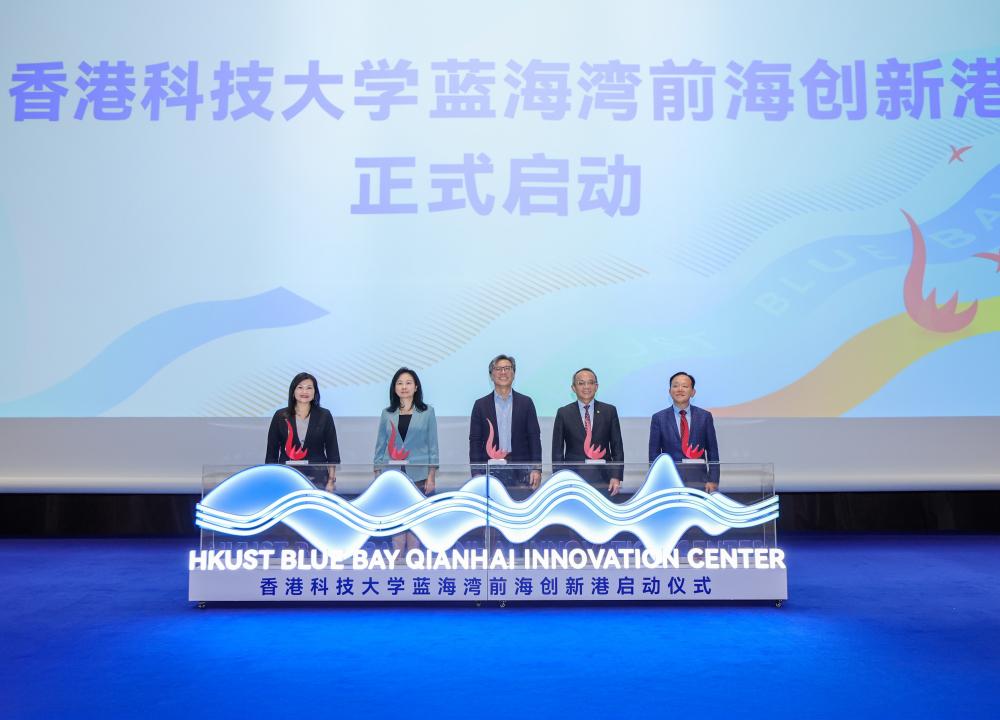
The Hong Kong University of Science and Technology (HKUST) recently inaugurated its Blue Bay Qianhai Innovation Center (the Center), marking a significant strategic step in strengthening the University’s presence in Qianhai, deepening Shenzhen-Hong Kong collaboration, and expanding its global innovation footprint.
The Hong Kong University of Science and Technology (HKUST) has launched the new WavyOcean Digital Twin Earth System Version 3.0, making its online platform available to the public for the first time. Built around the concept of "Taohai" – a Chinese term meaning "searching or discovering from the sea", the platform transforms ocean data from research-focused resources into shared knowledge accessible to all.
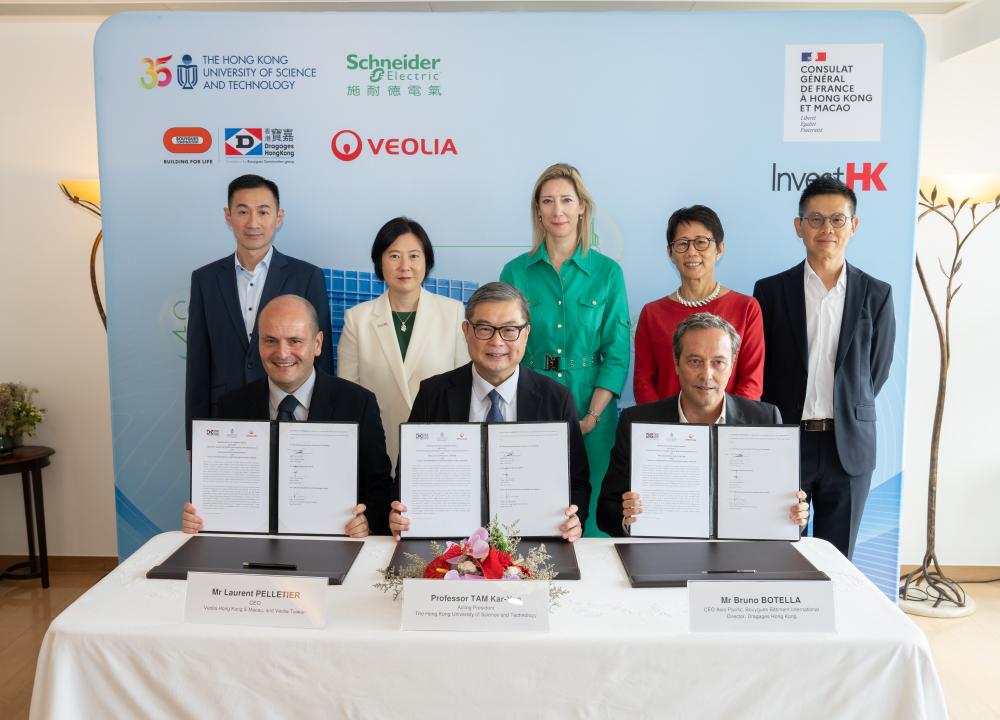
The Hong Kong University of Science and Technology (HKUST) and a consortium of leading French corporations today signed a works contract and a second-phase Memorandum of Understanding (MoU). Welcomed by Invest Hong Kong (InvestHK), the two agreements mark a significant step forward and turn the low-carbon retrofit partnership established in September 2025 into concrete action.