






News & Stories
2026
News
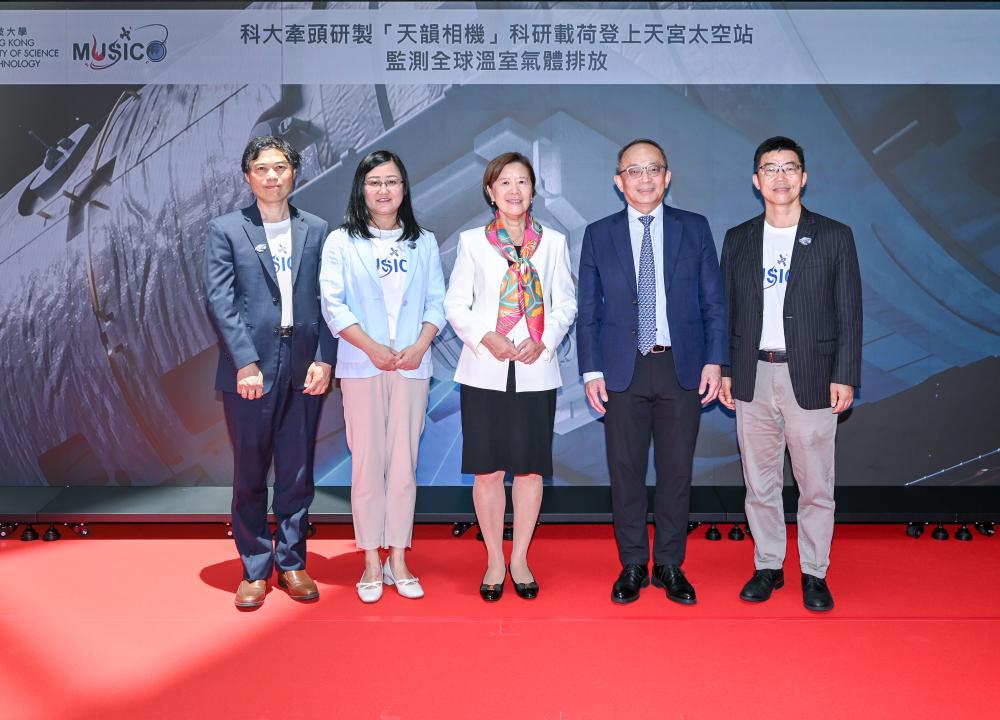
World’s First Lightweight High Resolution High Precision CO₂ and CH₄ Point Source Detector “MUSICO” Arrives at Tiangong Space Station via Tianzhou-10
The world’s first lightweight, high‑resolution, high‑precision synergistic observatory for carbon dioxide (CO₂) and methane (CH₄) emission point sources – named “MUSICO”, Multi‑Spectral Imaging Carbon Observatory, led by The Hong Kong University of Science and Technology (HKUST) – was successfully launched aboard the Tianzhou‑10 cargo spacecraft on May 11 and has arrived at China’s Tiangong Space Station. This is not only Hong Kong’s first scientific payload deployed on the national space station, but also a historic breakthrough for the city in the development of high‑end aerospace instruments. The project fully demonstrates Hong Kong’s strong capability to build national‑level cutting-edge scientific payloads, to participate in long‑term space station missions, and to play a key role in addressing global climate change while serving the nation’s strategic “carbon peak and carbon neutrality” goals.

News
HKUST Achieves Outstanding Results in the Third Round of the RAISe+ Scheme
The Hong Kong University of Science and Technology (HKUST) has once again achieved strong results under the Research, Academic and Industry Sectors One‑Plus (RAISe+) Scheme launched by the Innovation and Technology Commission. In the third round of funding, seven HKUST research projects have been recommended for funding, accounting for nearly one-third of all approved projects in this round. Together with the first two rounds, HKUST has now secured a total of 19 funded projects, the highest number among local universities, underscoring its leading role in translating research outcomes into real-world applications and in advancing industry-academia-research collaboration.

News
HKUST Secures Dual UNESCO Endorsements for Two International Deep-Sea Research Programs
Two international deep-sea research initiatives, led by the Southern Marine Science and Engineering Guangdong Laboratory (Guangzhou) (GML) with significant contributions from The Hong Kong University of Science and Technology (HKUST), have received official endorsement from the United Nations Educational, Scientific and Cultural Organization (UNESCO). Both initiatives are designed to address critical gaps in climate science by investigating seabed methane seeps' role in global warming and exploring biodiversity in extreme deep-sea ecosystems. The two programs are poised to strengthen global collaboration and deliver scientific insights essential for tackling future climate challenges.
News
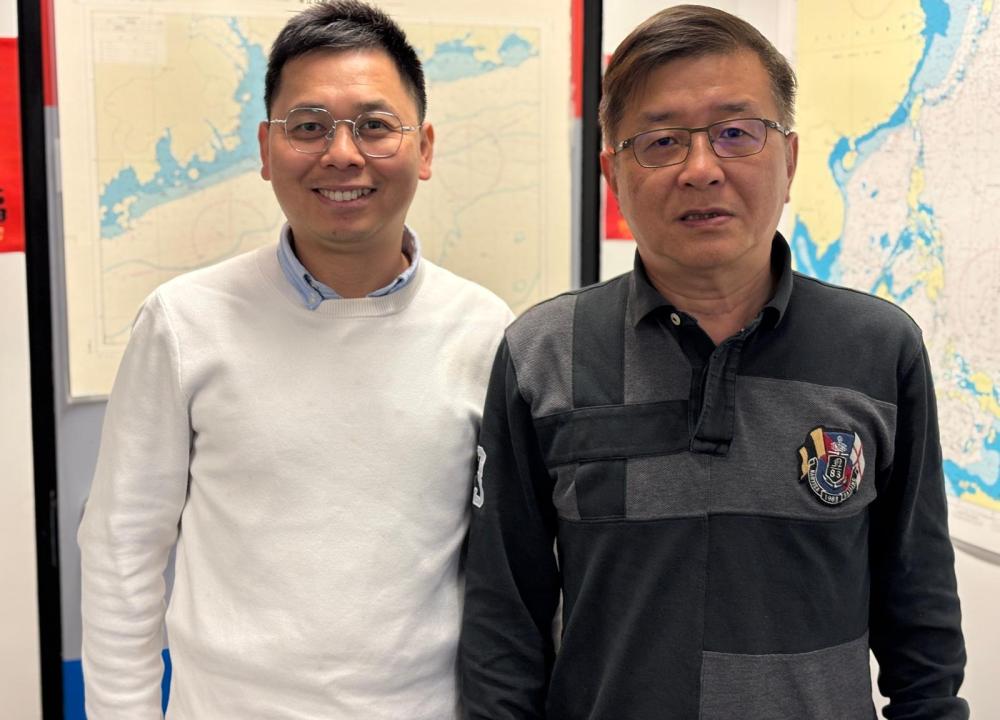
HKUST Researchers Reveal How Tropical Pacific Climate Shifts Amplify Arctic Sea‑Ice Melt
Led by scholars from The Hong Kong University of Science and Technology (HKUST), a research team has discovered that, since the early 2000s, both sea surface temperature changes near the equator and the associated atmospheric adjustments over the Pacific have accelerated markedly—becoming a key driver of the increasingly rapid loss of Arctic sea ice during autumn. The findings highlight that, under ongoing global warming, climate linkages between distant regions are far more dynamic and complex than previously understood.
News
HKUST Study Reveals Why Tropical Cyclones Rainfall Surges Before Landfall
A research team at The Hong Kong University of Science and Technology (HKUST) has analyzed 40 years of data covering around 1,500 tropical cyclones and discovered that average rain rates surge by more than 20% in the 60 hours before landfall. The study is also the first to clearly identify the physical mechanisms behind this increase, showing that rising humidity over coastal areas and enhanced land-sea frictional contrasts strengthen convection, intensifying rainfall ahead of landfall. The results provide valuable insights for improving coastal disaster preparedness and early‑warning systems.
News
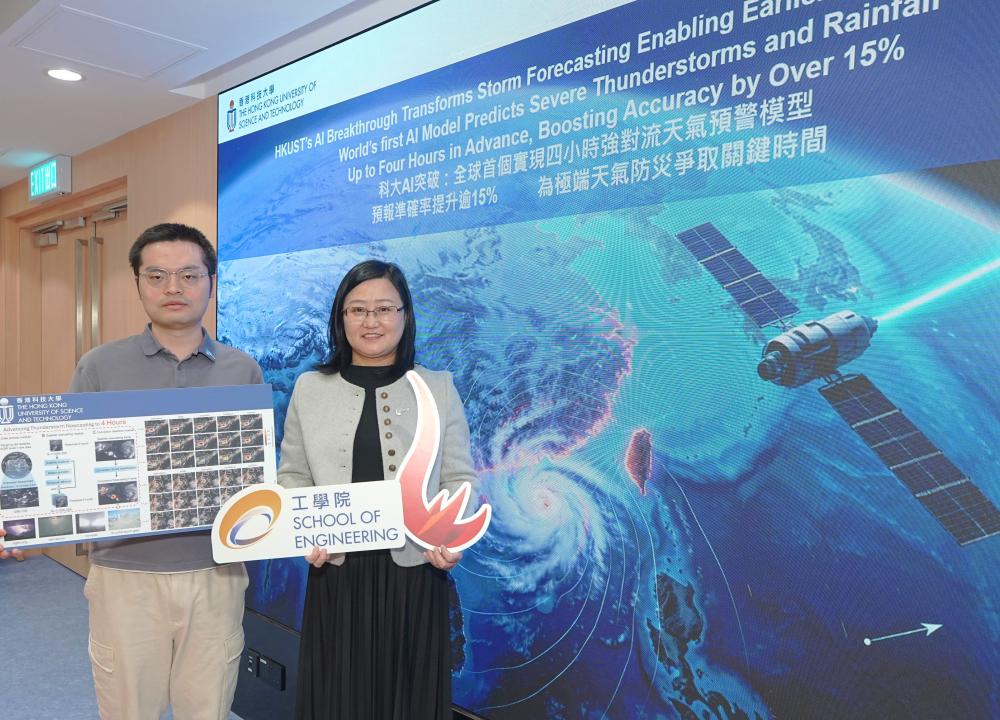
HKUST's AI Breakthrough Transforms Storm Forecasting Enabling Earlier Life-Saving Warnings
In a critical advance for climate resilience, researchers from The Hong Kong University of Science and Technology (HKUST) have developed an AI model that can predict dangerous convective storms—including Black Rainstorms, thunderstorms and extreme heavy rainfall like those that have hit Hong Kong—up to four hours before they strike. This world-first technology, developed in collaboration with national meteorological institutions and powered by satellite data and advanced deep diffusion technology, improves forecast accuracy by over 15% at the 48‑kilometer spatial scale compared with existing systems. This breakthrough strengthens the overall accuracy of the national weather forecasting system and promises to transform early warning systems for vulnerable communities across Asia.

News
HKUST Develops World’s First Sub-Zero Celsius Elastocaloric Green Freezer, Reshaping Freezing Industry with its Zero Emissions
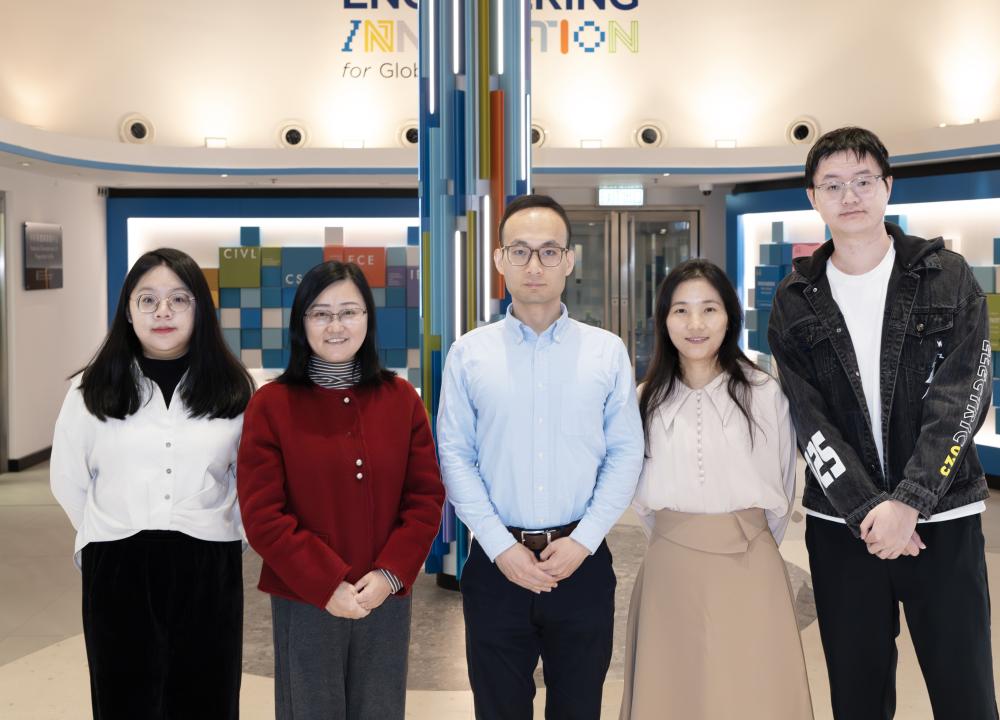
Researchers at the School of Engineering of The Hong Kong University of Science and Technology (HKUST) have developed the world’s first Sub-Zero Celsius elastocaloric freezing device, capable of reaching temperatures as low as -12℃. This represents a significant milestone in expanding green solid-state elastocaloric refrigeration technology into the global freezing industry, offering a promising solution to combat climate change and accelerate low-carbon transformation of the global freezing market. The findings have recently been published in the international journal Nature, under the title “Sub-zero Celsius Elastocaloric Cooling via Low-transition-temperature Alloys”.
2025
News
HKUST Researchers Unlock Why Arctic Ice Melt Paused
A research team led by The Hong Kong University of Science and Technology (HKUST) scholars has discovered a significant slowdown in Arctic sea ice melting since 2012, with the decrease rate of 11.3% per decade to an insignificant downward trend of only −0.4% per decade. This phenomenon is closely related to a shift in the North Atlantic Oscillation (NAO) pattern, from a negative phase to its positive phase, which traps cold air within the Arctic region. It is projected to peak between 2030 and 2040, after which the Arctic could enter a new phase of accelerated ice melt. Without reductions in greenhouse gas emissions, this may trigger severe climate and environmental crises within decades.